Recent news that Netflix is launching an animated story called Steps, giving Cinderella's wicked stepsisters a sympathetic side. And how is Netflix marketing this? "Think you know Cinderella’s “evil” stepsisters? Think again!" I can't help wondering if some of this is based off the success of the Wicked movies, which is all about giving the Wicked Witch of the West a sympathetic side--she's not really a villain, she's just misunderstood.
Sarcastic tone aside, I apprciate this trope when it's done cleverly. I think Moana was a really solid example of that, both with Maui and Te Ka. I could even argue that the greatest RomCom of all time, Pride and Prejudice, relies on this trope. It can be thought-provoking, and it can also be useful for a reader to reflect on--to catch yourself before you go too far down the villain path.
But I think it's gotten out of hand. Between Maleficent, Cruella, the recent Disney Star Wars attempts to make the Sith look cool, Amazon's atrocious Cinderella, the lunacy of Rings on Prime with the orcs and Pharazon, and now this Steps thing, it seems like that's predominately the story you can expect from forthcoming movies. It's getting to the point where it's not thought-provoking anymore and undercuts the stakes of the movies.
And people are getting irritated.
That got me thinking about villains of the past, though--villains like Darth Vader. No one had a problem with (spoiler alert) Darth Vader redeeming himself at the end of the trilogy. Actually, funny story: when we were kids, Mom would only let Karl and me dress up as good guys for Halloween. We weren't allowed to be villains. But one year, we were a little late shopping for costumes, and the only decent costume in Karl's size was Darth Vader. Mom decided that was acceptable for Halloween because Darth Vader ended as a good guy.
The family lore, I think, actually draws the attention nicely to the difference between Darth Vader and some of the more recent villains: Vader wasn't a sympathetic villain, he was a redeemed villain.
And this got me thinking about a whole host of villains...
Being Sympathetic Does Not Equate to Being Redeemed: The Baroness from Ever After
Ever After is a fun movie that takes the old Cinderella story and fleshes the characters out very well. The evil stepmother gets this treatment subtly but effectively. When we meet her, she comes across as warm and friendly and some of her actions make it seem like she might be very in love with Cinderella's father... but she's the wicked stepmother, so this has to be an act right? Well, about halfway through the movie, there's a scene where she stops and comments on how much she sees Danielle's father in her, and the brilliant acting makes it abundantly clear that, yes, she truly did love her husband.
It's never said specifically, but throughout the movie it is implied that the Baroness hates Danielle because when the father died, his last words were for Danielle, not for her. A real, or at least honest, love for her husband led her into envy and villainy.
What sets Ever After apart from the stupid orcs in Rings on Prime, however, is that the Baroness's villainous actions are never excused. Her cruelty toward Danielle and the servants, and her lies to the king and queen in pursuit of her ambition, are ultimately punished when she is turned into a servant in the castle, switching her position with Danielle's. In that scene, we see that she has not learned her lesson, and she is still being horrible.
The key point in this case is that having your heart broken in the past does not make you a good person. A villain needs to face some recognition of their awful actions and make efforts to make amends; they should not get off lightly, and their actions cannot be excused.

Being Sympathetic Makes an Easier and More Plausible Path to Redemption: Snape from Harry Potter
If you haven't read the last Harry Potter book, please stop reading here. This reveal is actually brilliant, and I would hate to spoil it for you.
Snape has a whole catalogue of villainous behavior in the books against the kids, especially Neville, but the worst of his behavior happened before the kids showed up at school when he joined the Death Eaters. We don't know what he did as a Death Eater, but it's not unreasonable to assume he was involved in, bare minimum, tormenting some Muggles, and likely torture as well. And even if he himself didn't murder anyone, he definitely joined someone who he knew was committing murder.
But late in the last book, we learn the most we ever learn about Snape's backstory: he came from a deeply unhappy and unsupportive family. His father hated magic, his parents quarreled constantly, and the only happiness he ever found was when he spent time with Lily Evans, who he fell in love with. After getting to Hogwarts, he found more friends, but all of them grew up to be Death Eaters--presumably, that was a big factor in him joining Voldemort himself. But he never stopped loving Lily, and then he was suddenly forced into a conundrum when Voldemort swore to kill the woman he loved.
At no point is Snape's behavior acceptable. Enormous portions of his tragic backstory are extremely similar to Sirius and Harry's, but while Sirius also has a catalogue of unacceptable behavior as a teenager, he never played with the Dark Arts (why in the world does Snape always get romanticized as a tragic bad boy and Sirius doesn't? I'll never understand that), and Harry remained a generally kind and honorable person. As for Snape, his traumatic and tragic life don't excuse his behavior, but they do explain it--and, crucially, they also explain his redemption.
When Voldemort decides he's going to kill Lily, Snape switches sides completely, spying on Voldemort for Dumbledore and helping to keep Harry safe, all this done because he loves Lily. The very thing that could have been trivialized as making Snape a sympathetic villain became his path to redemption. Snape's motives--both for evil and for redemption--are very clear.
Even though Snape does change sides, he also is not exempt from consequences for his actions... although, if I'm being honest, I kind of think the consequences he got were worse than he deserved by the end (losing the trust of his friend's son, being forced to kill the person who took him under his wing and cared for him, losing any chance of being accepted by anyone on either side after the war with Voldemort was over... he was definitely one of those characters for whom death was not a punishment). Regardless, although he was honored as a hero in the end, he's still forced to deal with the effects of his actions. That is an important part in any redeemed villain's story.

The Villain Is Reminded That Honor Matters: NCIS Season 9
Season 9 was admittedly not very interesting to me, but on a purely technical level, it's one of the more well-crafted seasons. The final arc pitted two villains together, one a terrorist whose son was killed because of faulty wiring, so he decides to go on a rampage and setting off a bomb in the Navy Yard; and one, Jonathan Cole, was a former bomb squad member who was the main dirtbag in one of the earlier episodes but didn't seem to have a more important act than that. Then, in the very last episode, the team is struggling to apprehend that aforementioned terrorist, and as part of that, Gibbs grabs Cole from prison to give more information about said terrorist. Both of them together discover the enormous bomb on the Navy Yard, right next to the glass windows of Abby's lab, and Cole says something like, "Get out of here, keep her safe." Gibbs leaves the bomb expert with the bomb, and he tries to disarm it, but before he can, the cell phone attached to the bomb goes off and he is killed.
It's a rather poignant setup because you have one villain who isn't going to change, and one villain who, when faced with overwhelming danger, proves himself to have courage and to remember that honor is to help protect others from danger. It's a little bit of a twist because, as I remember, he didn't have a particularly understandable reason for going rogue in the first place, so he wouldn't be the one you would expect to find redemption, but he did.
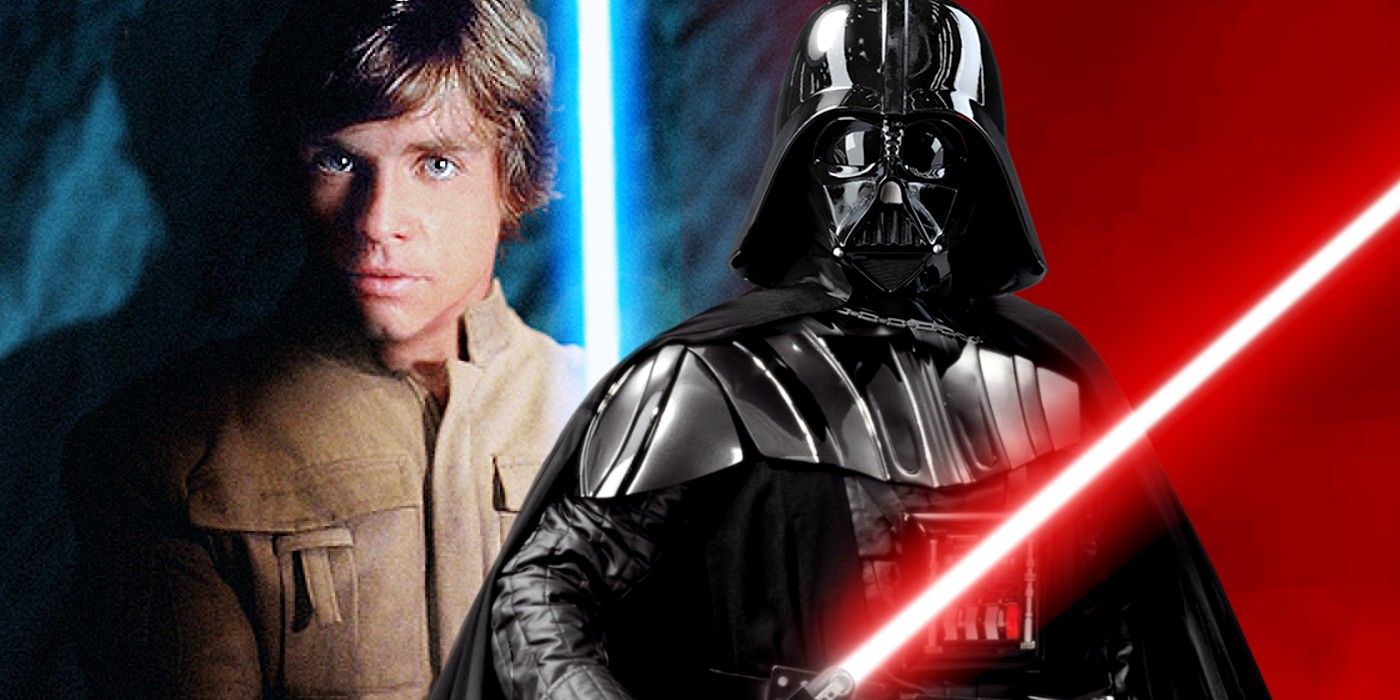
Someone Has Hope That Encourages the Villain to Choose Otherwise: Darth Vader
Darth Vader is one of the classic examples of a villain redeeming himself, but that probably wouldn't have happened if not for Luke. For as long as he can, Luke holds on to a belief that there is some good in Vader, even when Obi-wan and everyone else had completely given up on him.
I think the fact that many characters acknowledge how evil Vader has become--and he has--sets Vader apart from Maleficent et al and gives his story an edge that some of these "sympathetic" and "misunderstood" villains don't have. Moreover, it shows how strong Luke really is to maintain his hope in the possibility of Vader still having a good side; then that strong hope is rewarded when Vader switches sides, and paying with his life.
Incidentally, you can apply a lot of the same logic to Megamind, too.
A Villain Has a Responsibility to the People He Hurt: Ebeneezer Scrooge in A Christmas Carol
What more appropriate story to talk about in this post, at this time, than Scrooge?
(There is a more appropriate story, but I'll come to that later.)
A Christmas Carol's first stave does an excellent job setting up how selfish, evil, and miserly old Scrooge is, with a cold heart and no thought for anything but business. We even seen that early in his youth, his love of gold turned away the woman he loved, and how it led him to be cold to his only nephew and his only employee, leading to him missing out on the happiness they all shared.
The first four of the five staves are varying degrees of creepy as Scrooge is visited by ghosts, but the final stave is a longer ending than Return of the King and is completely rewarding as we see Scrooge making amends to the people he hurt. His reputation completely changes, and his actions are detailed: he becomes friendly with his nephew, he helps out the Cratchits and especially Tiny Tim, and he becomes known for generosity to the poor. These actions, these choices, are completely different from who he was at first.
A Christmas Carol and the redemptive story of Scrooge has become the iconic story of Christmas. So how could there be a better villain's redemption story than that?
All of Us Have Been Redeemed: Jesus in a Manger
I can't let Christmas go by without a reference to the greatest redemption power of all: The birth, death, and resurrection of Jesus Christ. If you are burdened by guilt of your past actions, or despair that no one could care for you, I encourage you to turn to the Gospel of Matthew and the Gospel of Luke, where you will find a God who loves you, you, so much that he willingly endured torment on earth and death to redeem you from your brokenness. Anything that you feel is keeping you from being a good person--God has taken it away. His promise of forgiveness and healing is there for you to claim.

So What Would Make Steps a Successful Story About a Redeemed Villain?
Based on what I've written above, I come to the conclusion that Steps needs to do a few things to be a successful story about a redeemed villain:
- Acknowledgement: There absolutely needs to be some acknowledgement that the stepsisters engaged in awful behavior. No excuses. No qualifiers. Bad behavior is bad behavior, and needs to be called out.
- Motivation to Change: There needs to be some kind of reason they want to change. Love, guilt, loneliness, or someone having hope in them--any of these would probably work.
- Changing Actions: Somehow, they need to do something that will prove their change of heart is sincere. This could be making amends to the people they have hurt, or taking on some new responsibility.
So, how does it sound like Steps will accomplish this?
When misunderstood Lilith (Wong) is blamed for hijacking the Royal Ball with a stolen magic wand, she accidentally turns her sister Margot (Hsu) into a frog and allows the kingdom to fall into the hands of a prince-obsessed mean girl. Now Lilith must team up with Cinderella (and a surprisingly dreamy troll) to save the kingdom, repair the fractured fairy tale, and prove that even so-called villains deserve a shot at happily ever after.
Well, that just sounds like another misunderstood or sympathetic villain, as opposed to a redeemed villain. I suspect will be missing an acknowledgement that their actions were reprehensible. Which means they're going to have to change the stepsisters' actions, right? I mean, I don't know how they're going to make the stepsisters sympathetic with their behavior as the way it always has been--even Ever After could only partially accomplish that.
So... we'll see.


No comments:
Post a Comment