Showing posts with label Critical Reading. Show all posts

Wednesday, November 22, 2023

Eight Things Rings on Prime Absolutely Did Not Do Better Than Peter Jackson

 I'm not the biggest fan of Screen Rant, mostly because they have interesting headlines that I click on before realizing it's another article from them and that now my Facebook feed will be full of their far-less interesting articles. But I saw this article and I simply couldn't resist clicking on it, because yikes: "8 Things The Rings Of Power Does Better Than Peter Jackson’s Lord Of The Rings Movies".

Full disclosure, I saw the Jackson trilogy before I read the books, so I'm rather biased in favor of Jackson. Nonetheless, let's take a look at their list. I'm going to deal with their subheadings, not all their details unless their details are important. 

8. Rings Of Power Makes Sauron A More Interesting Character:

Sauron Was An Unseen Villain In Jackson's Lord Of The Rings

Sauron was an "unseen villain" in the trilogy? We saw his eye all the time (and yes, I know that the "eye" wasn't described that way in the books), and we heard his voice, which was freaky! If anything, that "eye" means we saw him more in the movies than we did in the actual books! (In fact... do we ever "see" him in the books?) He wasn't supposed to be the "interesting" villain; that was more Saruman, Denethor, and Wormtongue, who were admittedly a little shortchanged in Jackson's trilogies. 

But the point of the article isn't Jackson's imperfections; it's Payne and McKay's supposed areas of superiority over Jackson. The problem is that Payne and McKay's Sauron isn't interesting; he's just confusing. They don't establish his motivations until much too late, and although they suggest going back and rewatching the show now that you know Halbrand is Sauron (hahaha, now that you know, as if everyone didn't instantly know), it doesn't clarify any of his motivations. Confusing is not the same as interesting. 

This is the part that really annoyed me, though:

Tolkien's various notes and unfinished stories, collected and posthumously published as The Silmarillion and other books, provided even further details about Sauron, including his multiple plans, forms, and general personality. Prime Video's The Rings of Power really works in that it brings these aspects to the screen. Halbrand may be an invention of the series, but he better reflects who Sauron was.

It does not work. It absolutely does not work. The appendices say that Sauron "endeavours to seduce the Eldar. Gil-galad refuses to treat with him; but the smiths of Eregion are won over" in the year SA 1200, and three hundred years later, "The Elven-smiths instructed by Sauron reach the height of their skill. they begin forging the Rings of Power" (364, Return of the King, 1978 edition). They take roughly 100 years to finish, and only after Sauron forges the One Ring does Celebrimbor realize Sauron's real plans. That's about 400 years of planning, plotting, deceiving, and so on. In the show? He steals some things, he says a few diplomatic lines... and the only reason they're seen as clever or manipulative is because The Main Character is so utterly demanding and tactless. The last episode has him suggesting stuff to Celebrimbor that Celebrimbor should already know only to have another metaphor, but that takes up only part of the episode. And that, to Screen Rant, is "working"? Condensing 400 years of plotting and scheming into a few dumb lines that are primarily metaphor and some theft is somehow better than Peter Jackson's Great Eye? Better? 

In the last scene between Sauron and The Main Character, he lays out how she has been controlling events, and not him. You think that's closer to Sauron's character? 

That's just different. That's not better.

7 Peter Jackson's Lord Of The Rings Changed Elrond:

Elrond Is Far Kinder & Less Critical In Rings Of Power

I think this is the most reasonable one on the list, but it's once again different, not better. I quibble with the idea of describing Elrond as a "politician", when he should have been called a "herald" or a "captain"... oh wait, are they trying to make it "accessible" to "modern audiences"?  And to be fair, Robert Aramayo was an excellent choice to play Elrond (and I sincerely hope he quits Rings on Prime and goes to HBO's Harry Potter series and plays Lupin. He's just the right age, he's clearly a subtle actor, and he sure looks like Lupin!) Elrond's script tended to make the most sense, he was the least likely to describe what we could see happening on screen anyway. Like Sauron, his motivations weren't always clear, but they sure make more sense than Sauron's do. 

But none of that makes him better than Jackson's Elrond. I know Elrond never opposed Arwen's marriage to Aragorn in the book, which is a noticeable change. On the other hand, the Elrond in Rings on Prime agreed to "treat" with Sauron in the show, which he clearly didn't do in the lore. None of the Elves who were corrupted by him knew that he was Sauron at first, either, similar to the show, but certain Elves still sensed and mistrusted him because of their perceptiveness--Elrond in particular. So, which change is worse? The one where he loves his daughter so much he needs to be persuaded extra hard to allow her to marry a mortal? Or the one where he loses his perceptiveness and--possibly--some of his virtue and his rejection of power's temptations? 

To be honest, the Elrond in the show seems to want power--not necessarily for himself, but for the people around him. He first goes to the Dwarves because he wants to help Celebrimbor build the most powerful forge ever in order to recreate the wonders of Feanor (because the Silmarillion's whole plotline totally isn't a warning sign for how terrible an idea that is, oh no), and not to go revisit his friend. 

I'm with Jackson on this one, not McKay and Payne. 

6. Dwarves Aren't Just Comic Relief In Rings Of Power

Gimli (& Other Dwarves) Were Far More Serious In Tolkien's Works

Not really. In the books, they were comical for excessive courtesy and formality (especially Thorin in The Hobbit); in Jackson, Gimli was comical for his jokes and his daring; and in Rings on Prime, the dwarf prince was comical for crudeness and informality. True, Gimli was quite shortchanged in the Jackson movies, and we don't see his courtesy or his deep love of craftsmanship or beautiful ore, but we don't really get that from the dwarves in Rings on Prime either, so... different but not better. 

Yes, I know the show has a whole conflict about whether to mine mithril or not, but we don't see the Dwarves ever working at their forges or discussing their pride in created things. It's just interpersonal conflict. That's not really better, and it's certainly not closer to Tolkien than Jackson was. 

Now that I really think about it, we never hear about the Dwarves making anything in the show. Not only that, but the costumes were so simple and plain that we don't get to see the results of Dwarven skill and pride in their work, and that was a pretty big thing in the books. At least in Jackson's original trilogy, we get to see the beautiful mithril shirt and the designs on Gimli's helmet. We see a lot more beautiful craftsmanship in the Hobbit movies, even if some of it was rather silly. But what metal craftsmanship do we even see in the show? We hear about them building the forge, but that's not really the same. 

5. Orcs Look Fantastic In Rings Of Power

Practical Effects Have Come A Long Way Since Lord Of The Rings
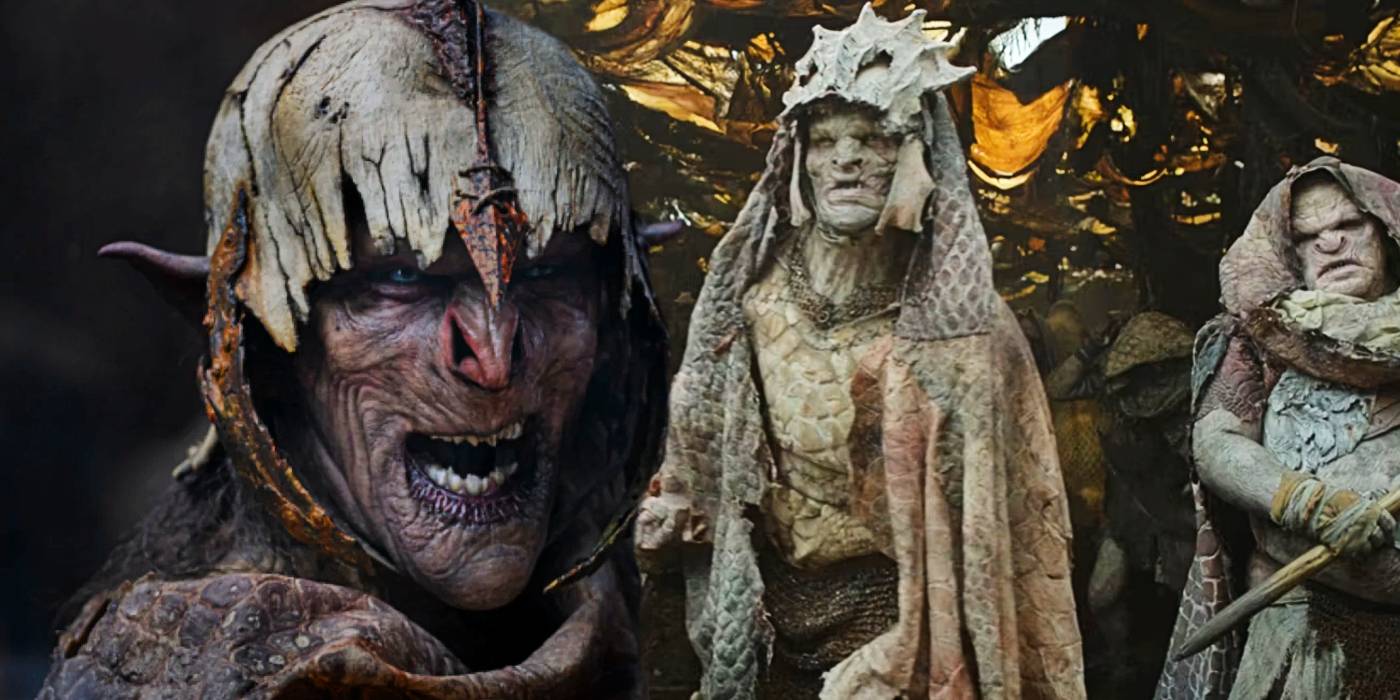
This is the picture Screen Rant uses for the Rings on Primes' orcs:

Here are some of Jackson's orcs:

Different, but not better. 

4. Peter Jackson's Lord Of The Rings Ruined Isildur

Rings Of Power's Version Of Isildur Is More Faithful To Tolkien Canon

I'm not going to pretend that I like what Jackson did to Isildur, but that doesn't make Rings on Prime's Isildur any better. His character, at the moment, is nothing like the heroic king that he would become, but just a wandering, confused young guy whose motivations keep changing. (If he wants to go West and "keep the old ways" with his brother, why does he suddenly change his mind in the next episode and go to Middle-earth? By the way, that whole thing could have been fixed if Elendil had said something like, "You can't go west until you've proven yourself and regained some respect. Come to Middle-earth, then you can go west.") I don't agree that such a portrayal--which, so far, has been completely original to the showrunners--qualifies as "more lore-accurate" or "better". 

I also don't agree that Isildur was "ruined" in the movies. I would have loved to see more of his heroism, but that "evil" smile he gives Elrond in Mt. Doom is very clearly because the Ring corrupted him, and it kind of parallels what Frodo does in Mt. Doom later. 

It's important to remember that the whole Mount Doom scene between Elrond and Isildur was done to show the power of the Ring over someone's heart (foreshadowing Boromir and Frodo). What was the purpose of all the changes made to Isildur in Rings on Prime? 

3. Rings Of Power Gives Elf Characters More Variety

Jackson's Lord Of The Rings Made Elves Too Perfect

First off, isn't this the exact same article that was complaining Elrond was "too critical" in #7? But now, all their personalities blur together? 

Secondly, more variety? Yes. Good variety? Not really. What's especially rich is this:

Characters like Celebrimbor and Feanor were known to have significant faults, which often came down to pride and hubris. This is communicated far better in The Rings of Power, where these characters are seen to struggle with temptation in a far more relatable way and where one Elf is entirely defined from another.

The first problem with this analysis is that we never see Feanor do anything, much less struggle with pride (and did the show ever discuss Feanor's weaknesses?). The second problem is that we don't really see Celebrimbor "struggling with temptation", mainly because the "temptation" is so poorly executed--that whole (completely original) plotline about how the Elves must leave Middle-earth or die, but can be saved by mithril being turned into a ring really weakens the whole "temptation of power" and turns it into a justified struggle to remain in their home. 

And what's more, the show completely cut out one character trait from many of them--they weren't fooled by Sauron in disguise. I don't think Rings on Prime gets to take credit for their characters when the show takes away an important character trait just to make their villain look stronger. 

But sure, "more variety". 

2. Middle-Earth Is More Diverse In Rings Of Power

Lord Of The Rings' Casting Greatly Lacked Diversity

I'm not getting drawn into this one. 

1. Rings Of Power Covers More Middle-Earth Stories At Once

Lord Of The Rings Was Limited By Its Movie Format

I burst out laughing when I saw this. 
There is so much wasted time in this season! Just some examples:

  • The whole "will Numenor help the Southlands" debate gets solved and then reopened
  • There's a plotline about Isildur being missing and presumed dead, when everyone knows he lives to cut the Ring off Sauron's hand
  • Whether the Harfoots will trust totally-not-Gandalf or not keeps getting solved and then reopened, again and again
  • Those three witches

Remember how for #8, I pointed out how much of Sauron's story they cut out? They cut that out in favor of wasting time! Couldn't we have at least gotten two episodes of Sauron and Celebrimbor, instead of just part of one?

They may have covered more Middle-earth stories, but that doesn't make the stories good. They were silly, illogical, and massive wastes of time. 

Also, covering more stories "at once" isn't better. If it's anything at all, it's a problem because those stories didn't happen "at once". 

The Lord of the Rings tells the story about how to defeat the titular villain. All the stories in those books are indeed about defeating Sauron. That's not a limitation--that's called focus. Meanwhile, pretty much none of the Rings of Power's stories are about the aforementioned rings of power. How is that better? 

How is that better applies to most of this article. Best case, it's just "different", but none of these are better. 

Monday, December 28, 2020

Genre Crossovers

This probably won't be posted for months, but I'm going to start this now...

I stumbled across an author named Melanie Dickerson, who has written mostly romance novels... many of which are medieval-themed. 

If you catch her page on Amazon, you'll notice that her longest series is a fairy tale/historical fiction/romance/Christian series. That combination of genres in and of itself made me highly nervous. Each reason could be a blog post on its own, but for the sake of clarity, here are a few of them:

  • I do not like most modern-day Christian fiction. See this from the Babylon Bee to understand my reasons. 
  • I get nervous about the combination of historical fiction and fairy tales, because the expectations, suspension of disbelief, and whole point of each genre is completely different (I would argue even opposite)
  • I don't like modern romance books. (Give me Pride and Prejudice, where it honestly is a surprise who Elizabeth ends up with! Or at least, it legitimately might be, if not for the fact that everyone has known the story for the last 100 years...) 
  • I'm not crazy about some of these adaptations of fairy tales. The last one I paid any attention to was a TV series, which... which started off just fine, but the story had nothing to do with the fairy tales, and... it wasn't what I was looking for in fairy tales. I liked Once Upon a Time all right at first, but it didn't stay up to the same quality, in my opinion. Then there are the live action Disney remakes, which... gag. 

But of course, moth to flame. The books had pretty covers, the openings were smoothly written, and I love fairy tales. (Which are not fantasy, by the way, but that's another issue altogether.) 

I haven't read all of her books, and I haven't even read all of the series I'm going to review. It's supposed to be chronological, but I get a very distinct feeling that it isn't entirely necessary to read them all to properly understand the stories, and in honor of my savings account I did not read all of them. I'm just going to review the ones I have read. 

Why these books? I do read a lot of fiction, so why don't I write reviews for all of them? There are a couple of reasons (to be discussed anon), but generally speaking, I think I had a lot to say about these.

So, without further ado...

Okay, as I was writing this, I realized I can't launch into these reviews without at least explaining myself as far as the genre crossovers are concerned, because that's going to come up a lot in my reviews of these books. 

What is Suspension of Disbelief? 

It all begins with suspension of disbelief. I think when people consider suspension of disbelief, people tend to think of breaking the laws of science (magic in fairy tales, etc.), or for how time gets warped (i.e., falling in love in one dance, a la Disney Cinderella). In short, it is when the reader is willing to accept something in the story, without too many questions, that would never happen, or be terrible, or end differently, in real life. You, the reader, are willing to accept magical wands in Harry Potter because of different rules for the book's universe; therefore, you suspend your disbelief about the magical wands. If, on the other hand, a bunch of magical wands suddenly showed up in Little House on the Prairie, you would roll your eyes and stop reading the books. 

The thing that I think some modern readers either don't realize or simply disagree with me on (probably just disagree with me on, but hear me out) is another category of suspension of disbelief--what qualifies as right and good. What are good goals, basically. What makes a good outcome. 

The best example of this that I can think of is the ending to Return of the King. In the end, Aragorn is of course crowned king because he is the last descendant of the kingly line of Gondor. His ancestry makes him the right person for the throne. In a fantasy story, this is perfectly acceptable, because of what it embodies--strengthening of the kingdom, renewal of an ancient ideal, things being put right. You can accept this from Lord of the Rings, because that's part of the rules of the world that's been created--part of all things being put right means putting a king from the right family in power. 

However, imagine hearing that in a story that is supposed to more closely mirror real life. Can you just hear the cringe? The idea that one person is "rightfully" the king, not because of anything they did, not even because of anything their father did, but because of somebody their long-distant ancestor was... that makes many of our modern sensibilities recoil and protest. After all, wouldn't Faramir have been an equally good king? Possibly even a better one, if you think about it? His followers were willing to die for him (and murder for him), he managed parts of Gondor during bleak times, and his people knew him. Why is Aragorn preferable? Aragorn is preferable because he comes from a line of kings, and Faramir does not. That means that Aragorn must be king in order for all to be put to rights. 

In our modern world, and in stories that are supposed to closely reflect our modern world, that is completely unacceptable. But in a fantasy story (heavily inspired by values and expectations from a completely different time in history), we can suspend our disbelief and suspend our expectations and accept it. 

One Guardian writer exemplified this conflict by analyzing Lord of the Rings in the same way, with the same expectations, he he would a piece of nonfiction or a story that is meant to reflect on specific parts of our world rather than universal moral truths. The entire article is worth reading if only to understand how not to read Lord of the Rings, but to summarize, he observes that in all the stories, you only hear the point of view of the good guys. One quote that stands out:

Both books are one-sided recollections made the Baggins family... A balanced telling might well have shown Smaug to be much more of a reforming force in the valley of Dale.

 In other words, the author points out that a story is not reliable if you cannot hear both sides of the story. This is completely true--if you are studying a historical event or maybe a story about World War I. But it does not apply in a fantasy book--it's not part of the expectations the author has for the reader. It's not important to a fantasy story. (It can be included in a fantasy story, don't get me wrong, but it's not essential--at least, not in the same way that it is essential to a more real-world story. A fantasy story doesn't need this, but a historical or "realistic" story normally does.) 

Here is a quote that just sums up the problem beautifully:

The Hobbit and Lord of the Rings aren’t fantasies because they feature dragons, elves and talking trees. They’re fantasies because they mythologise human history, ignoring the brutality and oppression that were part and parcel of a world ruled by men with swords.

But he's not mythologizing human history. He's writing a story that has nothing to do with the rules of human history (human behavior, yes, but that's not the same as human history). When you read Lord of the Rings, you aren't supposed to be looking for a blueprint or guidelines or theses on to how to study history, how to run a kingdom, or how to solve some kind of geopolitical issue of the day. (You're supposed to be looking for personal courage, a sense of hope amid darkness, and other personal advantages.) 

These different expectations lead to a different--a significantly different--suspension of disbelief. It would be self-defeating to approach a fantasy in the same way you'd approach a historical fiction because the different expectations and different rules lead to a significantly different disbelief that needs to be suspended. 

Suspensions of Disbelief in Fairy Tales

I know I spent the last section waffling on about fantasy and Lord of the Rings, but the genre is very closely connected to fairy tales. I remember reading one paper (I can't find it now--if I find it later, I'll link to it) that struggled to describe the difference between fairy tales and fantasy stories in any meaningful way. One thing that both of them have in common, to be sure, is that they do not have practical how-to's or realistic expectations of rulers--or even realistic depictions of the world. 

One absolutely classic example of a fairy tale with expectations so wholly and completely at odds with our world is The Goose Girl, which, in summary, is about a servant usurping her mistress's place as a princess. The princess, because she is a princess, is good and kind and gentle, while the servant, because she is a usurper, is bad. But again, in a fairy tale, this is part and parcel of the genre. The good people are rewarded for being good by becoming princesses or simply being born princes or princesses; the rest of the fairy tale world is in order when everyone else respects them for their goodness and follows them and is loyal to them accordingly. There is also an arranged marriage in this story, which still leads to everyone living happily ever after because it is what is supposed to be. 

These are concepts that us modern post-Enlightenment readers would never accept, if anyone ever suggested letting them become a reality. However, we aren't supposed to view those details as the real point--the real point, which we are supposed to take out of the story and share in our world, is that goodness and patience will be rewarded, while liars will be found out and discredited. 

Granted, Goose Girl came from a time period with different expectations of how countries were meant to be governed. (Wikipedia says the Brothers Grimm published their first anthology in 1812. That is certainly after the Enlightenment, and after serfdom's decline in England and France, so it's possible the people who told them that story didn't hold to those values; and even if they did, I cannot possibly imagine that people back then were stupid enough to think that all rightful princesses were also good princesses. Nonetheless, the story comes from Germany and not England or France, and it was told by people who weren't necessarily part of philosophical and political revolutions inspired by the Enlightenment as early as 1812, and Wikipedia is still Wikipedia, so...) Let's instead look at a modern fairy tale, and turn our attention to Disney. 

The easy option here is Cinderella. (The good one.) I know it gets a lot of flack for having the "love-at-first-sight" business, enhanced by a musical number, even, but in a way, that doesn't really matter. The prince has no character because he isn't a character--he is a reward. You're not supposed to watch it and think that it's a commentary on healthy relationships; you're supposed to watch it and recognize that the main character was good (even when people around her were bad), and kind, and pleasant, and she was rewarded for those things. Totally illogical and unwise for a modern young adult reader looking for a husband or wife, but that isn't what you watch the movie for. 

The remake ignored that, and tried to be more logical and realistic. And we all know how that turned out. Yuck. (And don't even get me started on the other remakes.)

The point is, part of the suspension of disbelief in a fairy tale is a suspension of some logic and a lot of cynicism about people in power. 

Suspension of Disbelief in Historical Fiction

Historical fiction is supposed to represent and portray the particular struggles a certain group of people at a certain time faced. That means people need to behave in ways that are logical and influenced by their time, reflect common sense, and generally need to be explained in terms of how to navigate specific, real-world problems. 

Anyone who's ever studied history knows that history is a deeply cynical topic, for two reasons. First, there are a lot of scenarios where there really are no good guys. No horses in the race. Things don't change like we want them to (French and Mexican Revolutions come to mind), rightful kings are like John Softsword or Edward II of Caernarfon or (good grief!) Richard II, and honorable people frequently find themselves between two bad choices. Heroes have fatal (and often disgusting) flaws, and rulers who start off strong and good do not end that way. 

That story in fairy tales--about the "rightful king" being on his throne--is, in real life, often used as a justification and defense of awful tyranny, and rarely used in support of real justice and fairness. 

Not all of history is like that--Alfred the Great, the English barons and the Magna Carta, and the life of George Washington all stand out, and there must be others (that I can't think of just now because it's late at night)--but so often you hear about "heroes" and "the Great's" of history being horrific people who did brutal things to achieve their goals.

Part of what makes fairy tales fairy tales is the idea of all things lining up the way they are supposed to, but a study of history shows that that rarely happens. Suddenly, when you're forced to choose between one king or another king, one side or another in a war, you need to have as many facts as possible. You need to consider the logical outcome of either side. You need to know the policies, the actions, the belief in legality and individual rights. This information helped lead people to support Henry of Bolingbroke instead of Richard II, or Edward of York instead of Henry VI, or Henry Tudor instead of Richard III. And even then, was Richard III really a worse king than Henry Tudor? He probably murdered his nephews, but as far as his subjects were concerned, was he any worse than Henry Tudor? And after all, the Tudors gave additional power to the dreaded Star Courts. But even the story of the Star Courts is a convoluted story, because at the beginning, they were popular and were expedient ways to dispense justice, but over time became tools of oppression.

These are questions that just don't come up in fairy tales, but must come up when studying history. A historical fiction novel that doesn't address these moral dilemmas of how people in power behave (kings or whatever local power happens to be relevant to the story) is not believable.

So, what belief do you suspend when reading historical fiction?

Someone (I've no idea who said it first) once said that studying history is like visiting a foreign country. When you visit a foreign country, you leave your own cultural expectations behind (to the best of your ability) and expect to encounter the new country's customs. History--and, by extension, historical fiction--means recognizing that the characters will have different expectations, different mores, and different reactions to events because they are colored by their times and culture. 

To some extent, that is similar to a fairy tale, in that it doesn't follow your rules. However, it follows someone's rules, someone who was real and really there. In the case of the aforementioned kings, a proper historical fiction would portray the expectations of kings at that time, demonstrate why Richard III did not meet them, and why Henry Tudor did, bad royal lineage and all. A good king in a fairy tale, if his role as king is discussed at all, is just good and kind and not selfish; a good king in history is far more complex, and sometimes a person can be a good king but be a very bad man. 

Can you see why I'm nervous about combining these two genres?

A Word on Fantasy and Reality...

I can already hear my mom's chastisement, so I'm going to put this in here:

  • Of course there are good people in history, and even good people in power. My only comment is that it is not common. Personally, I would like to see historical fiction focus on those good people (Alfred, Washington, etc.), or, at the very least, when you have a bad person in history, portray them as bad and as something to be avoided. But this is one of those concepts that deserves its own blog post. 
  • Both fantasy and fairy tales reflect reality, which is why I used the phrase "real life" instead of "reality" in my paragraph (pedantic, but I'm tired and that's the best I can do just now). Fantasy and fairy tales reflect values, emotions, and (especially according to Tolkien), desires. However, the connection between fantasy and reality is extremely complex and runs too far afield for this blog post. If readers want, I'll expound on this concept too, but Tolkien already has, and I have nothing to add to the master. Just read Tolkien's essay, or a summary and analysis of it here. 
Oh, look at that. It didn't take me a couple of months. It only took me two weeks.