Showing posts with label The Rings of Power. Show all posts

Sunday, June 23, 2024

I Apparently Live in Mordor

 At least, I do according to Rings on Prime. 

Trying to figure out distances in the Rings on Prime's maps is almost as bad as trying to figure out distances in my books. (Oh believe me, I know, but my excuse is I was a teenager when I planned them and I didn't have tens of millions of dollars to hire expert cartographers!) But according to Microsoft Copilot, and yes, that is the best source I have for this:

The distance between Ostirith and Mount Doom in Middle-earth varies depending on the map used, but it’s roughly 100 miles or 160 kilometers. The Tower of Ostirith, perched high on a cliff, overlooks the settlements of Tirharad and Hordern12. Mount Doom, also known as Orodruin, stands alone in the Plateau of Gorgoroth, rising about 4500 feet with its base approximately 3000 feet tall3. So, while the eruption of Mount Doom would indeed be powerful, the Southlands should be well within a survivable distance from it. Remember, though, this is all in the magical realm of fantasy! ๐ŸŒ‹๐Ÿ”ฅ1.

So, 100 miles? It was 100 miles from that water-started pyroclastic flow to the Elven watchtower?

According to Rings on Prime, water kickstarted a pyroclastic flow from Mount Doom that devastated the entirety of Mordor, including the watchtower a hundred miles away and other lands even further, and that explained why the land was ruined for thousands of years. This is the point--the pyroclastic flow from Mount Doom is supposed to be so strong that it blocks out the sun so the orcs can walk around without being burned by the sun. 

I know very little science, but I know this is silly because of where I live. 

My apartment is about 120 miles driving distance and 44 years away from Mt. St. Helens. So, according to the show's logic, I should be living in Mordor in an ecosystem the orcs would be happy with. 

I don't. Because that's not how volcanoes work. 

By the way, I have heard tell (although I can't find a written source to corroborate) that St. Helens was a vent for multiple volcanoes all around the Ring of Fire, and that it relieved pressure of multiple volcanoes. Therefore, one would think its eruption more powerful than the eruption of a single volcano that isn't part of a range. 

Also by the way, I remember hearing from a very young age that the truly dangerous part of a volcanic eruption like St. Helens was not the pyroclastic flow, although that was deadly, but rather the mudflow, when all the glaciers on the mountain suddenly melted and the water mingled with ash and dirt to slide down the mountain at incredible speeds and sweep away anyone and anything in its path. Like, I remember, in first grade, the teacher reading to us a picturebook about St. Helens during reading time, and someone asking if all of this one guy's sixteen cats died in the mudflow.

Look, I realize this is shoddy reference work, but that's because I'm referencing the lore and legend of my home. My mom and grandparents lived in Washington during the eruptions. Mom scraped a bunch of St. Helens ash off of her car in a peanut butter jar, and I think she still has it somewhere. I have three figurines carved out of St. Helens rock sitting on my shelf. I don't remember a single year in elementary school when I didn't have at least one lesson about St. Helens. In sixth grade, the much-hyped overnight field trip was visiting St. Helens. I remember, with vivid clarity, my fifth grade teacher telling how when the mountain erupted, she filled her bathtub with water to make sure she had fresh water, sat holding her child wondering if she was going to watch her family die horrible deaths, and then hearing God promising His strength to her if it came to that. 

And now I live in places where they all lived, in green, flourishing, beautiful lands that look more like the Shire than like Mordor. So I don't have to have a degree in science to know how stupid this is. 

This was St. Helens in 2018, a few months before I went to China. 

In the books, Mount Doom was not a natural volcano; instead, its eruptions were directly connected to what Sauron was doing. But if you had the misfortune of watching Rings on Prime, you may have noticed that Mount Doom went off because some water spilled onto the magma which caused a pyroclastic flow--meaning that they tried to make this make sense with science (by the way, read that entire article, because that headline is not what the scientist said! He describes exactly what kind of eruption happens, and nowhere does he mention a pyroclastic flow!). 

And before you (and by "you", I don't mean my average reader, I mean whoever at Amazon may be reading my blog) say that the water only started the volcano but Sauron's power can continue the volcano, maybe, but the point of the volcano in Rings on Prime was to create a new homeland for the orcs--a place they can call their own and not have to worry about the sun. That kind of implies the characters thought the water on the magma would continue an eruption for the foreseeable future, doesn't it? 

It feels weird to write this post because of how limited my scientific knowledge of volcanoes truly is. But in the end, none of my favorite reviewers mentioned Mt. St. Helens compared to Mount Doom, so I decided it was worth the post. 

Wednesday, May 15, 2024

Darkness Will Bind Them?

 English lesson! 


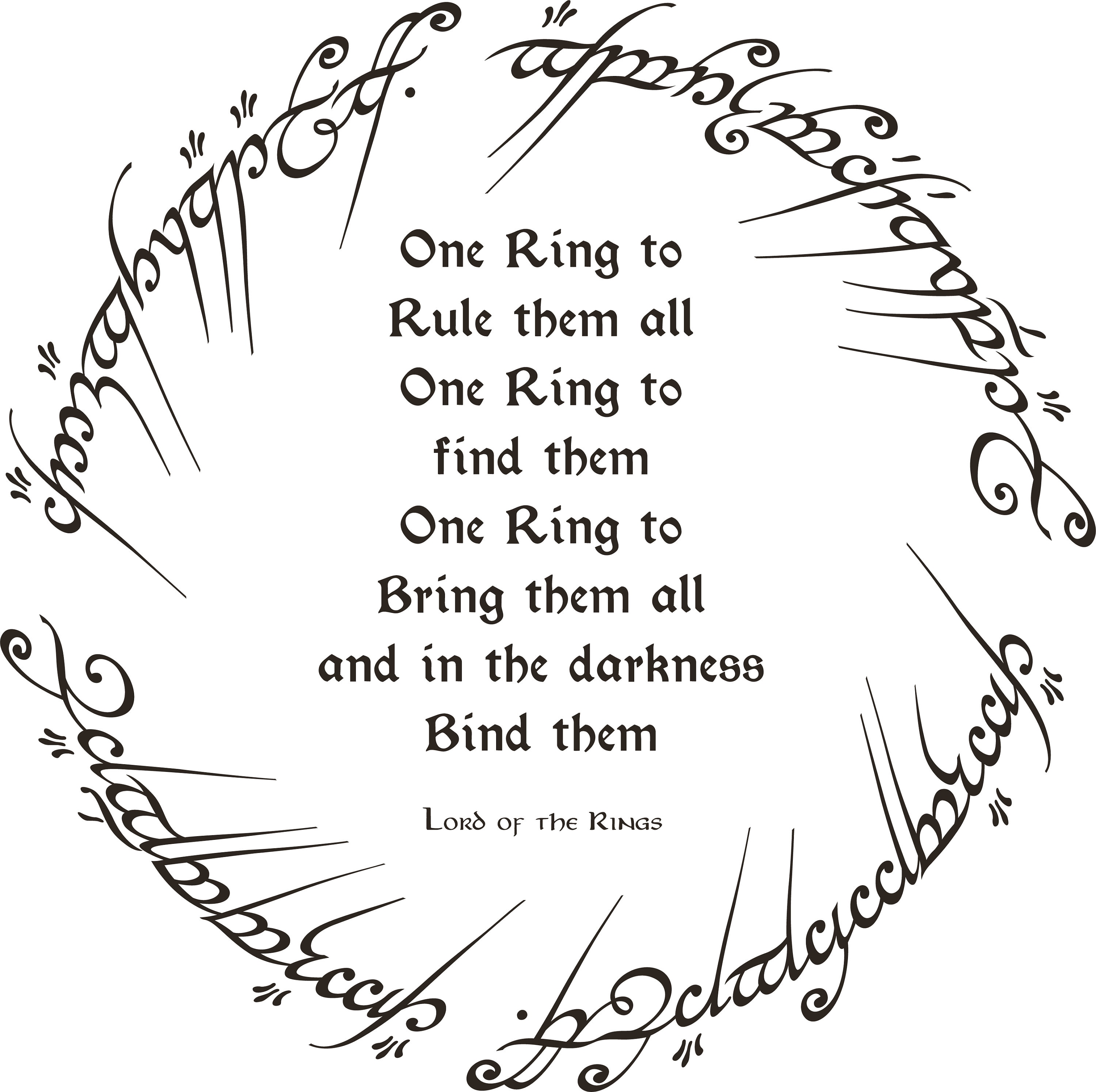
In that poem, there are four verbs: "rule", "find", "bring", and "bind". A verb must be done by a noun; so, dear reader, which noun is doing those verbs? Is it

a) One Ring, 

b) Darkness, or

c), Them? 

Well, according to Rings on Prime, the answer is "Darkness":


The real answer, of course, is a), the One Ring. The One Ring will bind the other rings in darkness. 

Seriously... did an AI create this trailer? 

By the way, if my add-on is to be believed, yes, that trailer is approaching a 1:5 like-to-dislike ratio. 

Tuesday, May 14, 2024

Is Someone At Amazon Reading My Blog?

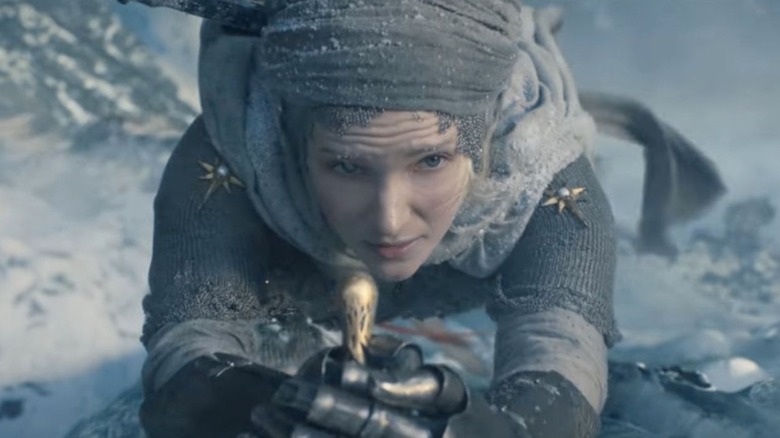
 Like everyone else on Twitter, I knew that Rings on Prime's second season's trailer would drop today. I have watched the thing, and of course I have thoughts, but the thing that stood out the most to me was this one shot of The Main Character:


Does this mean somebody at Amazon was reading my previous posts about her hair not being in a crown?!

Probably not, but just in case some person is, in fact, reading my blog, here's the one thing I want to say to you the most: stop messing with stuff. Stop giving Pharazon's character traits to Miriel. Stop inventing characters if you can't include the already-existing ones (hey, was Anarion even in that trailer? He wasn't in the first season. What about Cirdan the Shipwright? I'm pretty sure they promised us Cirdan). Stop giving new powers to the Silmarils, as if they weren't already epic enough. 

We love Tolkien as his works are. You want to win an audience back? Stop messing with Tolkien to the point that your show is unrecognizable as Tolkien's works. 

Tuesday, April 2, 2024

If This Is Lore, It's Bad Lore

I think I've read somewhere that the two Rings on Prime showrunners really know their Middle-earth lore. Every once in a while, something flashes through in the show that supports this claim; the problem is that the lore is used so badly that it makes no sense. In addition to the rough and pointless explanation of the Silmarils and the invention of an elf fighting a Balrog on the Misty Mountains instead of near Gondolin, there was something else that gave me pause.

I'm not saying it's unreasonable, per se, but in the context of the show...

To set the scene, The Main Character is in an elven graveyard, looking at the images of dead elves carved into living trees. The scene flashes by a few dead elves, and this one grave caught my eye:


At no point does the show give a name for this dead elf, but upon my first viewing, I saw this glimpse and immediately thought, I know who that is! In the Silmarillion, there is one infamous elf-dog duo, and I can't think of another one. 

Then I decided that my knee-jerk reaction might be wrong, so I did some digging just to verify. 

What do we have in the picture? An elf that we know is dead and a big shaggy dog. That star on his shoulder is worn by all the elves in this show, and I remember fans arguing over whether that was the star of Feanor or the star of Finarfin (this article explains why it's really neither). One of Feanor's sons was Celegorm, and because he was a renowned hunter, the Valar Orome gave him a mighty hound dog named Huan. 

That dog in the picture first gave me pause, because that is not a hound dog. My brother has a hound-shepherd mix, and she has short hair and enormous eyes, which is about the opposite of that dog. Then I remembered that while Huan is called Huan the Hound, he's actually a wolfhound, not a hound... and a wolfhound looks pretty much like that carving! He's also too small to be Huan--if you've ever seen the Silmarillion cover that has the woman riding on the dog, that's Huan:

Image source, ironically, from Amazon.

Regardless, I think it's reasonable to assume this grave is Celegorm and Huan, yes? If it's not, and the show just invented another wolfhound-elf duo purely to be in a tomb, then I don't think that's my fault for guessing wrong. 

Having said all that... why was Celegorm buried with honor when he was so evil that Huan abandoned him? 

Most of Feanor's family had severe moral shortcomings, but a serious argument can be made for Celegorm being the worst of them. His primary role involved manipulating the people of Nargothrond (the city of Finrod, Galadriel's beloved brother) away from their true king (which was Finrod); lying to Luthien and then imprisoning her to force her to marry him; and then egging on his brothers to the Second Kinslaying (where he died fighting Luthien's son). 

Hang on, hang on, hang on... the show wants me to believe that The Main Character is Galadriel. The Main Character--in that very scene the screenshot is taken from--is mourning her brother Finrod. Celegorm undermined Finrod and tried to take his city and his people from him. Why, why, is he buried next to Finrod? Why would The Main Character allow that? 

I could be wrong (I don't have the book with me at this moment), but... but didn't Celegorm specifically mean for Finrod to die in Sauron's dungeons? As much as The Main Character hates Sauron for murdering her brother, shouldn't she also despise Celegorm for abandoning her brother to die? And yet, here we have his statue next to Finrod's, and even a line about how The Main Character thought she'd be buried next to all the dead elves there, including Celegorm? 

By the by, after it was revealed that Celegorm and one of Feanor's other sons had lied to Luthien and... possibly abandoned Finrod to die, on purpose? I can't remember... the people of Nargothrond turned them out, and even Celegorm's nephew was so disgusted that he refused to go along with him. That nephew was Celebrimbor, also a character in the show. 

Furthermore, in that second Kinslaying, Celegorm's servants captured Luthien's grandsons and deliberately abandoned them to die in the forest. Maedhros and Maglor, two of Feanor's less objectionable sons, heard about this and were horrified, so they searched for the two boys but never found them. I... won't say that's as severe a rejection as Celebrimbor's, but that's certainly not an honorable memory. 

All of this is to say that it makes no sense for these two to be memorialized next to each other, and given how soundly Celegorm was rejected by even the other Noldor, I don't know who would have built his memorial in the Noldor capital. 

It also makes no sense for Huan to be memorialized with Celegorm, because he abandoned Celegorm and devoted himself to Beren and Luthien instead. 

It is not impossible for Gil-galad to have built this as some peace memorial between the elves, or for some other powerful Noldor lord to want to honor both of them, or for someone to have decided that every Noldor who fought against Morgoth should be honored, and that that was more important than any of their infighting. All of this is possible. I would love for that to have been explained. 

But really, what was the point? What was the point of hinting at Celegorm and Huan, but doing it so perfunctorily and badly? 

Saturday, January 20, 2024

Evil Races? Let's Look At Two Fantasy Examples

This post does not have a point. It's just a series of my observations. 

One of the key points of Rings on Prime was their attempt to humanize the orcs, which is interesting because Tolkien himself also struggled with the idea of having an intrinsically evil race, like orcs. This video, from about 14:10-14:45 or so, does a great job explaining why RoP failed. 

I've heard things (but it's 10 PM at night and I have work tomorrow, so I'm not researching them now) about Tolkien having a hard time reconciling an "evil race" like orcs with his values of redemption. I've also read a lot of headlines about Tolkien's creation of an evil race being racist and problematic and so on and so forth. I remember also hearing about evil races being reevaluated in other forms of fantasy media, such as D&D--hence this song, for example. 

Something I realized recently, though, is that there is another "evil race" in fantasy that I have never heard this kind of theorizing about: the dementors from Harry Potter. Dear reader, I wonder why this might be? Why are fantasy readers uncomfortable with the orcs being an "evil race", but not uncomfortable with the dementors? 

I mean, I haven’t seen any D&D stuff rewriting the dementors to be sympathetic characters who have their own perspective, and NO, that is NOT A SUGGESTION. Please don’t do that! Having the unsympathetic villain makes the story more interesting, and when the characters spend the entire third book wondering about the morals of compromising with something so evil because it’s a way to punish other evil people… I mean, that’s very interesting and thought-provoking. (Especially when it turns out that they had no compunctions about punishing innocent people, because they are unrestrained evil.)

But I do have to wonder, why are intrinsically evil characters not even noticed in one series, but make lots of other people (including the writer) uncomfortable in a different series?

I suppose one possibility is the context of the story. Rowling’s books have a lot of discussion about unfair treatment to other creatures, so when she trots out one irredeemable creature, everyone kind of gives it a pass. 

Perhaps also because the only things we ever see dementors do are things that humans can’t do, and therefore we have no investment in them being redeemed. Orcs, on the other hand, engage in cruelty and violence, things that humans do and can be redeemed from, so we have an investment in their redemption.

However, I think the biggest difference is that the dementors are clearly some kind of animal, but the orcs in Tolkien were once other creatures. (The movies say they were once elves who were tortured and corrupted, and Rings on Prime really leaned into that; I’ve heard somewhere that Tolkien changed their backstory into something else, but I don’t remember what it was, and that’s not the one that everyone’s thinking of anyway, so…) Orcs are on one level the Elves are on too, while dementors are more in the category of wolves, sharks, and other animals that haunt our nightmares… except that the dementors in the book clearly talk to humans, so theoretically they should be on the same level as humans. 

To be honest, I don’t really care. There are other creatures in Tolkien’ legendarium that no one feels the need to redeem (Balrogs, barrow-wights, and Nazgรปl all come to mind), so maybe I’m wasting my time wondering over this question. But I thought it was an interesting difference, and I haven’t posted in a while, so there it is. If anyone has thoughts, then the comments should be working!

Wednesday, September 6, 2023

*Plot Twist Spoilers* An Implausible Fear Was Right

 There's one major plot twist at the end of the series, and this post spoils that. I somewhat think everyone knows what it is at this point, but in case you don't this is your warning. 

So. The first episode of Rings on Prime has The Main Character convinced that even though Morgoth was defeated, his lieutenant Sauron was still out there, and despite finding no trace of him after hundreds of years of searching, she is determined to find him. Then High King Gil-galad calls her back and declares the war is over and there is to be no more searching for Sauron. What he didn't tell The Main Character is that he knew Sauron was still out there because a tree was getting infected; he decided to stop The Main Character from searching for Sauron because "The same wind that seeks to blow out a fire may also cause its spread." (Or approximately those words.) 

I've heard a variety of critics of the show saying something along the lines of, "We know The Main Character will be right in the end, even if she has no proof now", but something I've realized in the last couple of weeks is that she isn't right--Gil-galad is. In the very actions of trying to destroy Sauron, The Main Character returned Sauron to power. 

I mean, the show never highlighted that. A moment of reflection from The Main Character when she realizes she probably shouldn't have tried to "touch the darkness" because "touching the darkness" didn't show her the light, it just caused all the problems for everyone, might have been nice. But no. 

Anyway...


The Metaphors Are Weird

There are two metaphors that are essential to the plot of the season. The first metaphor--not the first one the show says, but the first one I'm going to discuss, because it makes sense--is Gil-galad saying that wind can put fire out or make it spread. The Main Character is the wind, and Sauron is the fire; if she keeps trying to "put him out", she might make him return to power instead. Interestingly, Sauron is linked closely to fire, so this isn't too unrealistic to say. The problem is that this metaphor is weird for one person. Fire is out of control; a person (usually) is under their own control. This metaphor would make a lot more sense if we were talking about a large group of people, or a cause. 

Think about something like the Intolerable Acts from the American Revolution. After the Sons of Liberty destroyed a lot of tea in an act of protest, the British Parliament passed four severe laws to punish the entire city of Boston as an example to other colonists--blow out that fire, if you will. However, it made people angrier instead, and other colonies were spurred to action instead of frightened into obedience. The attempt to quash the Revolution instead made it spread. 

So in theory, this analogy could make sense, but it doesn't make sense for Sauron, because Sauron is not a cause or an ideology. The orcs do not believe in the virtue of Sauron. They're not going to rally to his defense. They were described as slaves of evil, for goodness' sake--if slaves' masters are defeated, will they rally to avenge him? This is not a situation where any fighting will continue once Sauron is gone; this is more of a head-of-the-snake situation. So, it doesn't make sense. 

It ends up being right, but it doesn't make sense. Jeepers, this show...

The second metaphor... you know, I'm not going to quote it, because it's confusing, bewildering, and cumbersome. I'll just say it has a ship, a rock, light, darkness, and light reflecting on dark water and therefore dark water looking like light. What it means is that sometimes it is unclear what the right course of action is, and you learn what the right course of action is by choosing the wrong course of action. (But wait, if you don't know what the right course of action is, how do you know what the wrong course of action is?) 

A lot of other people have said that this metaphor makes no sense in the context of the story, and I... sort of... almost... kind of disagree. It can make sense in the context of the story. It doesn't because the dialogue didn't set it up particularly well, but it could. 

Here's the context in which the metaphor plays out: The Main Character is ordered to stop her search for Sauron because the war is over (the High King didn't tell her that he knew Sauron was still out there), and so she's ordered to return to Valinor. When The Main Character remembers this metaphor, she decides to disobey Gil-galad and follow her instincts, doing what she believed was right, and continuing to fight. 

So, in this particular situation, there are two possible light-dark-ship-stone interpretations, where the "light" choice isn't clear. The first possibility is the debate on when it's right to follow your proper leader and when it's right to follow your own instincts and do what is right. There is a time to trust your leaders, even when they don't tell you everything, but there is also a time to stand up to the people over you and do what you know is right--and it's not always obvious which one is right in any given situation. The other possibility is knowing when it's right to fight for what's right and when it's right to accept peace. There's some meme on Facebook (I can't find it now) that says something like the strongest person knows when to use a pen and when to use a sword, but again, that's not always obvious, and you probably have to learn that from experience. Both of these moral debates could plausibly fit the metaphor and the situation The Main Character finds herself in. 

Now, that's me putting those interpretations on there. That is not the show properly explaining the dilemma. 

Either way, The Main Character decides to be the "stone" and chooses "darkness" (defying the leader, choosing fighting over peace) and returns to Middle-earth... by jumping out of the boat and swimming across the ocean...


So Gil-galad Was Right, Because...

Because The Main Character decided to swim back to Middle-earth, because she decides to be the "stone", she finds a raft in the middle of nowhere, and lo and behold, a fellow called Halbrand is on this raft. They end up going to Numenor. The Main Character really wants Tar-Miriel to send an army to the Southlands because she thinks Sauron is gathering orcs there, but Halbrand is the lost king of the Southlands and with an army from Numenor, he can reunite the Southlands and defeat Sauron. Halbrand insists that he is in fact not the king of the Southlands, but The Main Character doesn't listen. Halbrand also says that he did a lot of terrible things in the past, and so he doesn't want to be the king because he is unworthy, and he just wants to work as a nobody blacksmith. However, The Main Character keeps insisting and prodding (and manipulating) until he eventually agrees. They fight together to take down the orcs in the Southlands, there are a couple of heart-to-hearts between Halbrand and The Main Character in which he says she inspired him to have faith in himself again and hope that he could be redeemed. Then it's revealed that he's actually Sauron. He says again that The Main Character inspired him, and then he lays out his plans to dominate Middle-earth, with her by his side, and said he couldn't do it without her. 

So what that means is that by "choosing the darkness" The Main Character did indeed "spread the fire she sought to put out". Becuase she kept hunting for Sauron, she inspired him to return to power. 

Because she hated him, she inspired him to be him. 

Here's the problem with all of this: yes, Gil-galad ended up being right and The Main Character ended up being wrong, but not through any logical, standard, or predictable sequence of events; rather, through a whole lot of deeply implausible events that involve finding the only raft in the middle of an ocean and The Main Character refusing to believe the honest truth. The prediction was right, but not in any way Gil-galad could possibly have guessed (unless he was a prophet of some kind; I don't remember if he is in the books, and if he is in the show, the show didn't establish that). This makes Gil-galad lucky rather than right, and that does not inspire any respect for him. 

It also doesn't exactly make for a strong plot. It makes for a sequence of events, I suppose, but not really a plot. 


All That Is Assuming...

That Sauron was telling the truth, of course. I remember reading, but can't find now, an article when the two showrunners say that you're supposed to go back and second-guess if Sauron was ever telling The Main Character the truth, and if anything he says at all can be trusted. If he wasn't telling her the truth, then the alternative is that he was somehow manipulating her into doing all this. Gil-galad being right depends on Sauron being "out there" but not a threat until he encountered The Main Character, which tracks with everything that he said. On the other hand, if the whole time he was manipulating The Main Character, that means he was a threat from the beginning, so The Main Character was right and Gil-galad was wrong. 

The problem, of course, is that we don't know which it was. 

Like I said, I couldn't find that one article of them saying not to trust Sauron, but I did find this quote from them: 

She also has to bear some responsibility; “I empowered the Dark Lord. I saved his life on a raft. I was party to him coming from obscurity to head an army.”

Hm. Okay. Lots to unpack here. 

Obviously, this doesn't say whether he was telling the truth or not. What it does say is that Galadriel was responsible for Sauron's rise to power, and it implies that she was necessary for Sauron's rise to power. All the stuff that she did--getting him in good graces with the Numenoreans, using them to defeat the orcs and subdue Adar, and finally getting into good graces with Celebrimbor to start forging the rings with mithril--he needed her to do all that. I mean, that does indicate Gil-galad was correct and she was incorrect, so I guess that's something. 

In theory, this isn't a bad method of storytelling--a lower-down person befriending and using a well-placed person in order to rise through the ranks is a time-honored story, both in fiction and nonfiction. The reason this is baffling is that Sauron isn't a low-ranking person, he's Sauron! He's a shapeshifter in the First and Second Ages, and he does in fact corrupt the Elves of Eregion without needing Galadriel--as a point of fact, Galadriel is one of those people specifically mentioned to not trust him, while Celebrimbor trusted him quickly. See, in the books, he took on the form of Annatar and claimed to be sent by the Valar to assist the Elves left in Middle-earth, which he could plausibly do because he did in fact have special powers and he did have skill in craftsmanship to share with the Elves. This is when they make the rings. No assistance from anyone else necessary. 

Now, I checked the appendices and didn't find this spelled out (it's mentioned briefly as part of the timeline of the Second Age in Appendix B), so maybe they didn't have the rights to this story. 

But let's just say for the sake of argument that Sauron did need The Main Character to get into the good graces of Eregion--that means he had to somehow predict to meet her in the middle of the ocean on a raft, depend on her not believing that he's not the king of the Southlands, depend on her convincing Miriel to send an army when he won't help convince Miriel, and then somehow depend on her taking him to Eregion after that, in order to participate in a project that he had no way of knowing was happening, given that The Main Character had no idea it was happening and (if the timeline is to be believed) didn't even begin until after he met The Main Character. This isn't master plotting, this is getting unbelievably lucky. 

In fact, it's the same level of luck that Gil-galad had in order to correctly predict that Galadriel's attempt to destroy Sauron would return Sauron to power (when Sauron shouldn't have needed her to return to power in the first place!). 

Now, I will say, with a certain sprinkling of magic--magic that is hinted at in the lore, I might add--this could make sense. If Sauron has Tar-Palantir-esque powers, then theoretically he could pull this off. But I don't think he does. As far as I know, Sauron's powers involve manipulating fire, making magic rings, and shapeshifting. He is described as a liar and a deceiver, but that doesn't mean he can change your mind magically, and--most of all--if the showrunners decided to change Sauron's powers, they need to somehow explain Sauron's powers, because as it stands, we have no idea what Sauron can and cannot do. 

Alternatively, maybe Sauron's actual plan was to just get into The Main Character's good graces and then just go from there, without having Eregion as an end destination or having anywhere as an end destination; work spontaneously rather than create a long-term plan. That's never explained in the show, and I don't know why he would have picked The Main Character instead of any of the other Elves, so... explanation, please? 

Or maybe his actual goal was Numenor the entire time? Maybe, as he was floating on some random raft in the middle of the sea, his real goal was to get picked up by the sea-faring, sea-loving Numenoreans, and running into The Main Character was just a coincidence and everything that happened afterwards was his adapting? I mean, that could be vaguely interesting, if the show would explain it. 


In Conclusion

I originally was going to have another section about how the show confused feeling guilty about doing evil with not believing in yourself, or thought that believing in yourself was the way to move on from doing evil, but I don't remember the dialogue well enough to pinpoint exactly what the problem was, so I'm just going to leave it be. I will say that Sauron's motivations are never properly explained--that is to say, his motivation at the end, at least, was clearly defined as wanting to bring order to Middle-earth, but his smaller motivations, such as how any of his actions helped him reach this actual goal. 

A major, major issue with this show was characters being right about things they shouldn't have been right on. There were little moments, like The Main Character just getting lucky about a hidden door in the first episode or Elrond lucking out and guessing that a children's rhyme has the rhythm to open the most secret door in Moria, and then there were long plotlines like the whole one about Sauron returning to power. None of this makes Gil-galad seem wise or Sauron seem clever, because it doesn't rely on wisdom or cleverness. It relies on implausible, unpredictable nonsense. That's not a compelling conflict. 

Wednesday, August 30, 2023

Lore Isn't Useful If You Don't Explain It

This one might be the post that I'm most wrong about, and if I am, feel free to correct me in the comments.  

There are a few cases where I will concede Rings on Prime was fairly accurate to the lore, but in those cases, they presented it the same way Peter Jackson's trilogy has Eowyn present Numenorean lore. The major difference between these two productions is that Peter Jackson relegated Numenorean lore to the extended editions, where the initiated would be happy to see it but it wasn't essential to the plot or front and center in the story. Rings on Prime really struggled with that. 

There are two scenes in the Jackson trilogy that I'm thinking of--the first is that "stew" scene, when Eowyn tries to guess how old Aragorn is, and when he tells her, she suddenly says, "You are one of the Dunedain, a descendant of Numenor..." and so on. The second time (it's in Return of the King), right before Pippin snatches the palantir, Eowyn tells Aragorn about her nightmare of a great wave, which I'm pretty sure is a reference to the destruction of Numenor. (Or... was that the dream that Boromir and Faramir both had, and they gave it to Eowyn for some reason? Either way, a great wave sounds very like the destruction of Numenor.)

Incidentally, that first scene with Eowyn was one of the first scenes I saw of Lord of the Rings, when I was eight or nine years old, and I didn't have a clue what it meant. I think a lot of people probably don't know what it means, but that's fine, because it's not important for the story. It was clearly there out of respect for the story and respect for the people who already knew the story. 

I guess there's a third time, when Arwen whispers to Aragorn, "May the grace of the Valar protect you." Who are the Valar? But that doesn't really affect any of the story. It's just a nice scene reminding us that Arwen exists.

The problem with Rings on Prime is that most of their lore is presented in the same way that those three tidbits of lore are presented in the trilogy: without proper explanation. For example, and this is the biggest example, does the show ever explain what a Silmaril is? Or, for that matter, who Feanor is? Why the dwarves and the elves don't get along, but some of them get along, but it's odd that they get along? What an Istar is? 

There's a scene where Miriel says something like, "The Faithful believe that this tree signifies that the eyes of the Valar are still upon us--and their judgment." Cool. Who are the Faithful? Who are the Valar? And unlike the scene when Arwen whispers that, this actually is plot-relevant: this is presumably why Miriel suddenly changes her mind when the petals start falling from the White Tree and decides she will go against the beliefs of most of her people, when she was too afraid to do so just earlier. So... the judgment of the Valar is clearly more important than the beliefs of the people, so they're clearly very important... who are they? 

And yes, I'm going entirely off of a memory that is months old, but I'm not double-checking it because I'm not giving Amazon more views. I might be wrong about this one. But until I can buy these on DVD from a used bookstore, I'm not rewatching them. And I probably won't even rewatch them then. 

Wednesday, August 23, 2023

What Did They Do to Tar-Palantir?

I realized I'm probably in a very small minority here, but one of the things that irritated me the most about Rings on Prime is the changes they made to Tar-Palantir.

The King in the Books and the Show

In the Silmarillion, Tar-Palantir is the older son of a king who despises the Elves and the Faithful; that king forced a Faithful woman to marry him, so when their sons were born, she tried to raise them to love the Valar and the old ways. In the case of her oldest son, she succeeded; in the case of her younger son, she did not succeed, and he behaved more like his father. 

The king noticed this. He preferred his younger son over his older son, and wanted to make his younger son the next king instead. However, he couldn't do that because he couldn't change the Numenorean laws. The older son became king Tar-Palantir, but his younger brother kept causing him problems until he died early (the Silmarillion never mentions murder, but it does mention that he had an uncommonly early death). But the brother wasn't the only one causing problems, making Tar-Palantir's life very miserable. 

However, he was never deposed. He reigned as king until he died. Why? "[E]ven those that hated him feared his words as those of a true-seer" (Silmarillion 277). People were scared of him. They were not going to get rid of him or force him out because they were too frightened. What interests me about this is that Numenor had become very arrogant and confident in their own power, so it's fascinating that even in their arrogance they could be afraid of someone they hated. 

And in the show, all of that was just gone. 

Tar-Palantir was a feeble, insane old man who died of something, spoke in rambles, couldn't accurately convey his prophecies, went crazy after looking through an actual Palantir, and got forced off the throne! Because I guess the Numenoreans actually weren't scared of him? Oh, and by the way, do we really think that Tar-Palantir would go insane after looking through a palantir? (I'm fairly sure that the palantiri themselves don't actually hurt you. All they do is talk to each other. What caused Saruman and Denethor to lose it after looking through their palantiri is the fact that Sauron had one of the other palantiri and was talking to them. But we know for a very solid fact that Sauron doesn't have one in the show, so...) 

There's nothing much more to say about him, except that one of his prophecies was that when the White Tree died, the line of Numenorean kings would also die, and this prophecy eventually prompted Isildur to steal a fruit from the white tree and plant it, making an offshoot, and that offshoot eventually became the White Tree in Minas Tirith. In the show, Tar-Palantir is dead, and he hasn't made that prophecy, so... no White Tree in Minas Tirith? 

By the way, in contrast with Tar-Palantir, his brother is described as "strong and ungentle" (277); his son was Pharazon, also a character in the show. In the book, Pharazon 

had become a man yet more restless and eager for wealth and power than his father. He had fared often abroad, as a leader in the wars that the Numenoreans made then in the coastlands of Middle-earth, seeking to extend their dominion over Men; and thus he had won great renown as a captain both by land and by sea. Therefore, when he came back to Numenor, hearing of his father's death, the hearts of the people were turned to him; for he brought with him great wealth, and was for the time free in his giving (277). 

In the show? He buys a bunch of drinks and talks with people. Oh, and the only time he's near a fight, he stays out of it. In fact, when there's a war, he doesn't go with the ships; Miriel does instead. 

How Not to Write Strong Characters

One of the many issues I had with Rings on Prime is that, in order to make certain characters seem clever and strong, the writers made everyone around them seem like idiots. I've heard a lot of people talking about this issue with The Main Character, but I noticed it also with Tar-Miriel. I think that's why they have Elendil speaking very nervously to her, when as the son of the Lord of Andunie he probably should have known her well and addressed her almost like an equal; why they took away all of Tar-Palantir's story; and probably why they made Pharazon less of a warrior than he was in the books. They wanted to expand on Miriel's character, which is perfectly reasonable, but apparently the only way they could do that was to limit the other characters. Miriel has Pharazon's role, she has Tar-Palantir's place as ruler, and she looks powerful only by talking down to Elendil. 

It seems as though the writers weren't talented enough to expand on her character without diminishing other characters. They didn't have the skill to make her interesting, so they took other characters' interesting skills and put them on her. 

Well, either that, or they didn't have the rights to that part of the story. I guess that's always a possibility. 

Wednesday, August 16, 2023

So Close, Amazon...

I was scrolling back through my old text messages, trying to clear some space on my phone, and I stumbled across a screenshot I'd sent to my brother, and burst out laughing again:


According to my phone, I took that screenshot on August 16 of 2022, and given that the first trailer came out February 12, 2022, and the Vanity Fair article with that particular image came out February 10, 2022, it amuses me that it took them this long to come up with this response. Or did they respond before and I missed it? Certainly possible. 

But what's so funny about this post? Well, two things. 

First, it's these words: "Here's your proof from the book itself."

That quote isn't from a book. 

That quote is from a letter, which, for the information of the Rings on Prime media team and all others who don't know, is a different form of literature from a book. This particular quote is from Letter 348, which is dedicated to describing the meaning of Galadriel's name (it's on page 473 of that link). 

Incidentally, here's a screenshot that shows why it's important to actually click on articles, and not just read Google's summaries:


Okay, you might be thinking that it's silly for me to care this much about a quick little typo, but come on. This is after months of people criticizing this image online - even after months of the critics of this image sharing this precise quote online! - and it isn't even that difficult to find the letter. Someone had to photoshop that quote above the image, and cite it as "J.R.R. Tolkien", and didn't cite the letter, leaving some poor social media intern to look like a fool? It's just low-quality work, like the rest of the show. 

Didn't Amazon originally start as exclusively a book-selling organization? 

As for the second reason it's so amusing... well, look at it again:


Crown? I don't see a crown. 

I've mentioned this before, so I won't go into detail about it, but I still want to highlight, first of all, the disparity between what the words say and what the image shows (which happened in the actual show, too!), and second, the fact that the post I linked to was published on June 28, 2022 - so I referenced this letter even before whoever at Amazon's social media account created this post.

And now that I'm looking at this quote again, I've thought about something else that I may as well bring up to make this a serious post. Well, semi-serious. Tolkien talks about Galadriel doing "athletic feats" - basically sports. That does not translate immediately to going to war. You yourself probably know someone who's done sports but hasn't gone to war or made their entire personality about war. Women had been competing in the Olympics since 1900, but that didn't lead to the lot of them suddenly going into combat roles in WWI or WWII. 

The rebuttal to my point, of course, is that Tolkien describes her as "Amazonian", which does not mean "appropriate for a show made by Amazon", but rather is a reference to an all-women society of warriors from Greek mythology. I suppose it depends on what Tolkien means by "her youth", and whether that time in her life was over before or after Morgoth stole the Silmarils. I sure don't know the answer to that. Nonetheless, I retain my original opinion that the showrunners focused entirely too much on what they could get away with rather than what made the most sense from context clues. At least, that's what I think about their press. The show itself was... well, not that.

Wednesday, July 20, 2022

And Even More About Amazon's Questionable Foray Into Middle-earth! (Updated)

 A few days ago, posters showing the Numenoreans from Rings of Power was released, and someone released an article talking about the storyline and the actors. At least it's not Vanity Fair this time! (I say someone because I could have sworn it was Entertainment Weekly, but now when I go to their site, I can't find it anywhere. It's on Yahoo! right now.)

I actually did have a different blog post planned which would follow up my last post about Rings of Power, but then this article was released, and it showed my point even better! 

One of the things I grumbled about in the last post was that, for a time in Tolkien's legendarium when very little was described, the writers play fast and loose with what little Tolkien actually described. People have worked very hard to justify "warrior Galadriel", going back to notes and letters and everything except the books, but the stuff that is plainly written in all the books and notes and letters was missing from their descriptions. For example, where are Celeborn and Celebrian, Galadriel's husband and daughter? They spent so much time talking about what was possible for Galadriel, but the never mentioned anything about the stuff we actually know about her! 

Well, with the new information about the Numenoreans, we finally get some info about what they did with what Tolkien definitely said happened. And... well. Let's play a game. 

The following are excerpts from the article. As I go through it, I'm going to make lots of comments, of course, but I'm also going to keep track of the things the show makers--or, it must be stated clearly, the article (I don't have a lot of faith in journalists)--get dead wrong. As in, there are literally specific words in Tolkien's book that prove them wrong. Not debatable, not "just why", dead wrong. I will, however, also be keeping track of what they get completely correct. Again, not interpretive, not debatable, not trying to understand something Tolkien didn't write--but when they are wrong about something he did write. 

So then... off we go! 

The article opens up by talking about how one of the directors was admiring the set. 

"Being on set was just breathtaking," Yip explains. "We were there for weeks, but every day I'd notice a new detail I'd never seen before, like graffiti etched into weathered stone, or a small shrine. There was a whole wall made out of oyster shells. Every corner you'd turn, there was just so much storytelling.

It's that storytelling — and that level of obsessive detail — that anchors The Rings of Power, Amazon Prime Video's sprawling new epic (debuting Sept. 2)... With a reported price tag stretching well above $1 billion, The Rings of Power stands to be the most expensive TV series ever made. More importantly, the series faces the scrutiny of millions of fans, all of whom have spent the last few decades poring over Tolkien's writing (and rewatching the beloved Peter Jackson film trilogy.)

Plenty of people have dug up Jackson’s quote about not inserting their own agendas into his trilogy, so I won’t repeat it here. All I can say is that the shots they have shown have looked cheap. And the costumes, oh the costumes… Galadriel’s golden dress looks like it came from Spirit Halloween.

Maybe we’ll be blown away by the actual sets when we finally get to see them. It is possible that the advertising is just terrible and the series really is wonderful. Remember Frozen’s advertising? It looked more like Ice Age than what we actually got. So, to be fair, maybe it’ll be good.

That devoted fandom is why Payne and McKay pondered every tiny detail on The Rings of Power — right down to each stone in Nรบmenor. "It was one place that we were just laser-focused on saying, 'We need to get this right,'" Payne explains. "It's never been seen before. People have some ideas of what elves look like or what dwarves look like and what those kingdoms might look like. But Nรบmenor was, in some ways, a blank canvas."

They treated entirely too much like it’s a blank canvas. Not just Numenor, but other stuff, too. For what it's worth, there should be something vaguely "Celtic" about it--in one of Tolkien's letters (one that they love quoting certain parts of), he talked about how it should have some Celtic designs in it, although in other letters he says he doesn't want too much, and... No, there's not a whole lot. 

If only we could have seen these glorious sets in the trailer...

Tolkien describes Nรบmenor as the greatest human civilization in Middle-earth's history, a beacon of knowledge and culture that influenced the rest of the world. However, hubris and ambition rot the kingdom from the inside, and the island is ultimately destroyed, falling into the ocean like Middle-earth's version of Atlantis. In some ways, the story of Nรบmenor could be seen as a cautionary tale for the show itself. If The Rings of Power succeeds, it could rise to unprecedented heights, leaving a legacy that could endure for years to come. If it fails, it could instead go down like the doomed island itself, destined to sink beneath the waves.

Arise! Arise, Readers of Tolkien! Teasers shall be ratioed! Prime accounts shall be canceled! A sore day! A proud day ere the sun rises!

Seriously, though, I'm stunned at how united the Tolkien fandom is. Every ad for this show that I've seen on Facebook has overwhelmingly critical comments (of a most stern kind), and YouTube, oh YouTube... It's pretty amazing when Amazon has to unlist their videos for shame and rejection.  

The Rings of Power isn't a direct adaptation of an existing Tolkien novel.

It doesn’t qualify as an adaptation of anything Tolkien wrote, but I’ll explain what I mean later.

Instead, it's inspired by the author's extensive notes, published in the appendices to The Lord of the Rings.

“Instead”? What is the “instead”? Is it that it’s “inspired by instead of adapted”? Or is it, “extensive notes instead of an existing novel”? Or both? The answer to this question changes how the series is supposed to be understood.

After Amazon closed its multimillion-dollar deal with the Tolkien estate in 2018, the streaming giant began soliciting pitches from different creators. The winners were Payne and McKay, two largely unknown writers whose highest-profile job at that point was uncredited work on the Star Trek franchise... Despite their relative inexperience, Payne and McKay were lifelong Tolkien geeks, and their pitch centered on a story they themselves had always wanted to see on screen: the Second Age.

I truly am curious to know how they won out. One of the YouTubers I listen to says that studio executives like to hire inexperienced writers because they don't have the seniority to tell the studio "no" when they need to. 

Also—and I know this isn’t McKay and Payne, but I have to mention this somewhere—have you heard some of the dialogue in the trailer? The exchange between Galadriel and Elrond? It’s not great.

"We were not interested in doing a show about the younger version of the same world you knew, where it's a little bit of a prequel," McKay explains. "We wanted to go way, way, way back and find a story that could exist on its own two feet. This was one that we felt hadn't been told on the level and the scale and with the depth that we felt it deserved."

…? It absolutely is in the same world. That’s exactly what it is. It literally is in the same world and it literally comes before the Third Age. That’s how it works.

The Second Age occurs thousands of years before Bilbo or Frodo Baggins were even born, but the era includes some of Middle-earth's most significant events, from the forging of the rings to the rise of the evil Sauron.

In other words, it's a prequel.

Okay, technically that’s not enough for something to be a prequel. If you have a six-book series, Book 4 isn’t really a “prequel” to Book 5. I guess McKay and Payne are saying they want their series to have a status bigger than “serving to make the Jackson films more fleshed out”, and I can respect that.

But does anyone else remember, from the Vanity Fair articles, how they described Galadriel? For a refresher, here's what they said about Galadriel:

...this young hot-headed Galadriel…how did she ever become that elder stateswoman?

So... they want you to have backstory for a character that clearly explains how that character got to be the character they were in the work that you've already seen? 

What exactly do they think a prequel is? 

The era begins in a time of peace, but tension lurks throughout the land. The elves have founded the great kingdom of Lindon, but some fear that evil is creeping back into Middle-earth. Meanwhile, the dwarves are at the height of their power, living large in the underground realm of Khazad-dรปm.

The island of Nรบmenor is ruled by the queen regent Mรญriel (Cynthia Addai-Robinson), and this seemingly idyllic paradise is facing tensions of its own. Nรบmenรณrean royals are human but have elvish blood, and for years, they've been friends with their immortal counterparts. Over time, however, a schism appears, as some residents continue to pledge their loyalty to the elves and the godlike Valar, while others ponder a more modern, independent future (and become increasingly afraid of their own mortality). The showrunners note that Tolkien never wanted his stories to directly echo real-world politics, and they feel the same way about The Rings of Power. Still, Payne points out, there's something deeply relatable — and timely — about the anxieties and political divisiveness wracking this fictional island.

Okay. Lots to unpack with the Numenoreans. Let the game begin!

1. Tar-Miriel was the queen, not the queen regent. Her father was Tar-Palantir, the last faithful king of Numenor. Right: 0. Wrong: 1.

2. The description of the schism is correct. I’ll give them one point for that. The reason they don’t get two points is because they left out a rather important detail: the Elvish blood the Numenoreans carry comes entirely from Elros. The brother of Elrond. And, given that Elrond is an important character in the show, that’s some important information to share. Right: 1. Wrong: 1 

"Tonally, we wanted [Rings of Power] to reflect [Tolkien's] main story points of friendship and good and evil," Yip says. "One of the ideas is: How far into the darkness are you willing to go to do the right thing?"

Um. I’m not sure what this guy means. Does he mean, how far while fighting against the darkness? Like Frodo and Sam went into Mordor? Or does he mean how much you embrace the darkness? Because if that’s what he means—Boromir. Boromir wanted to use an evil ring to do good, and we all know how that turned out. 

At Nรบmenor's center is the royal Mรญriel, who is wrestling with how to guide the home she loves into the future. "When it comes to playing a character that holds such a lofty position, I can't say that I necessarily relate to what it is to be a queen," Addai-Robinson says with a laugh. "But I think there is something relatable about how isolating that can feel, and how you're grappling with things that no one else can really understand."

Queen? Or queen regent? Those are two different things. The earlier paragraph definitely said queen regent. Didn’t it? Did my eyes just read wrong?

Mรญriel is aided by her close counsel Pharazรดn, played by Trystan Gravelle. (No spoilers, but Tolkien readers know him as one of the major players in Nรบmenor's eventual downfall.) His son Kemen is played by Leon Wadham. "When you see the set of Nรบmenor, it's like you're walking through [Pharazรดn's] mind," Gravelle teases. "When you see these epic statues and this wonderful masonry, you're walking through the mind of a person that's burdened by his own mortality and is very concerned about what legacy he's going to leave behind."

3. Oh yes, spoilers! Pharazon isn’t Miriel’s counselor (nor is he her counsel—that’s not a person), he is her husband and her cousin. Here’s how the Alkallabeth describes them:

“And it came to pass that Tar-Palantir grew weary of grief and died. He had no son, but a daughter only, whom he named Mรญriel in the Elven-tongue; and to her now by right and the laws of the Nรบmenรณreans came the sceptre. But Pharazรดn took her to wife against her will, doing evil in this and evil also in that the laws of Nรบmenor did not permit the marriage, even in the royal house, of those more nearly akin than cousins in the second degree. And when they were wedded, he seized the sceptre into his own hand, taking the title of Ar-Pharazรดn (Tar-Calion in the Elven-tongue); and the name of his queen he changed to Ar-Zimraphel.”

I guess the only reason they changed their relationship is to remove this, but you could still have made Tar-Miriel the Queen! Right: 1. Wrong: 2. Incidentally, there's no mention of them having a son, or of Ar-Pharazon ever having a son. But there's no mention of him not having a son either, so...

By the way, remember the aforementioned split between the Numenoreans? The “Tar” in Tar-Miriel’s name is important, because that’s how you know what side she’s on. Same with Ar-Pharazon. “Tar” is “ruler” in an Elvish language, and “Ar” is the same word in the Numenorean language. Those kings and queens who were loyal to the Elves and the Valar used Elvish names, and those who weren’t did not, but Tolkien didn’t expect you to memorize Elvish and Numenorean names, so he added Tar and Ar. It was a simple way to immediately tell which side kings were on. Why did they take that out?

But maybe that’s just the journalist.
Fortunately, Nรบmenor also has hopeful allies, like the sea-faring Elendil (Lloyd Owen) and his son Isildur (Maxim Baldry). The young Isildur is Aragorn's direct ancestor, and fans know he will grow up to face off against Sauron, slicing the ring off the enemy's hand. But for now, he's just a young sailor trying to find his place in Middle-earth. "You know where he goes, but how does he get there?" Baldry offers. "That's what is exciting about this show: You see Isildur as a young man at a crossroads."

4. Elendil isn’t an “ally” of Numenor, he is Numenorean. He is descended from Elros. This means he is of the royal line of Numenor (but more removed from the throne than Tar-Miriel or Ar-Pharazon). Being a descendent of kings is what gives Aragorn the right to be king in the trilogy. Being descended from Elros is what gives Isildur and Elendil the right to be kings of Numenoreans in Middle-earth. I know that goes against modern sensibilities, but Tolkien’s world doesn’t always follow modern sensibilities. I’ve actually already written about this (before I knew anything about Rings of Power, ironically enough), in this post. Right: 1. Wrong: 3. To be fair, of all of them, this one sounds most like it could be the journalist's fault, but I'm not sure how I'm supposed to know one way or the other.

Also, tell me again how this isn’t supposed to be a prequel? Sounds like the actor for Isildur doesn’t agree. "You know where he goes, but how does he get there?" is some very prequel-sounding talk.

Addai-Robinson, Gravelle, Owen, and Baldry all play characters who loom large throughout Tolkien's work — but the actors caution that although you might know how their story ends, the journey can still hold surprises.

Surprises? Do you mean stuff Tolkien never wrote nor intended? Because I know the story of Elendil, Anarion, and Isildur. I know how they get there. It’s not hard to learn that. So the only way I’m expecting to be surprised is if you make stuff up.

But to be fair, maybe they only mean people who’ve watched the Jackson trilogy.

"There are signposts on the way," Owen explains, highlighting his regal mariner as a prime example. "Ultimately, those of us that know the lore know Elendil ends up helping to lead the Last Alliance of elves and men. But how he gets there? Tolkien hasn't written the man in three dimensions, and that's the gift of this [show]."

I will say that I don't think this section is "prequel-talk" (at least, not for the Jackson films), because I highly doubt people who only watch the trilogy know what Elendil did. He was there--he's Isildur's father, and he dies when Sauron smashes him with the mace, and the sword that broke but that Isildur used to cut off the ring belonged to him--but I don't remember anyone saying Elendil's name until Aragorn calls it "the sword of Elendil".  

One new character is Isildur's sister Eรคrien, played by Ema Horvath. Invented for the series... Tolkien wrote that Elendil had two sons: Isildur and Anรกrion. (At the start of Rings of Power, Anรกrion is off screen.)...

Offscreen, or another “wrong” point? This actually frustrates me. Why are you adding new characters when you can’t put in the characters that already exist? There’s also another character they left off—Elendil’s father Amandil. Remember how the Numenoreans live much longer than normal Men? Elendil’s father was still around. Now for the aforementioned spoilers: Ar-Pharazon leads a fleet to try to land at Valinor, which is forbidden for Men to do. Elendil’s father left for Valinor before Ar-Pharazon did, not to challenge the Valar but to beg for forgiveness and mercy for Numenor, just like his ancestor Earendil did for all of Middle-earth. (The Valar do not grant mercy, a wave covers Numenor and drowns all of them, including Tar-Miriel, except for the followers of Elendil, who were all in ships—the wind carries them to Middle-earth, where they establish Gondor and Arnor.) But no, we can’t have that! We need to invent a new character, because… why?

If any of them dare say one word about Tolkien not having enough strong females… they demoted Tar-Miriel, making her regent instead of queen, not Tolkien. They literally took away one of his female character’s power. No. No, no, no. Update! This video points out that Miriel was never truly the queen (starting at around 11:30) because Ar-Pharazon immediately usurped Miriel. So I guess, in that sense, Amazon is giving Miriel more power than the effectively had. However, they're taking away the power that was rightfully hers, and demoting her true authority, so I stand by my point that they have no right to claim they're improving female anything in Tolkien. 
For fans worried about conflicting canon, McKay and Payne point to one of Tolkien's published letters, where he wrote about wanting "other minds and hands" to create art in his legendarium. "We feel like we're taking up the gauntlet that he himself put down," Payne adds. "He gave us what we like to say are the stars in the sky that we have to connect and draw the constellation in."

Right: 1. Wrong: 3. Plus plenty of questionable stuff. You do not get to claim you are filling in the constellation when you ignore the stars! This is what I meant when I said this doesn't qualify as an adaptation of anything Tolkien wrote. One out of four being correct is not an adaptation. 

At the end of my last blog post, I said this:

My issue with this show is that they seem to be relying too heavily on what they can do, rather than what they should do. "Tolkien never said Galadriel didn't fight, therefore we're definitely going to have fighting in a war be a major part of her character." That sort of thing. And there's a lot of it--far more than, "This is what Tolkien did say, so this is what we're doing." They seem to be relying too heavily on what they aren't forbidden to do, rather than on what they should do. 

After reading about the Numenoreans, I feel completely justified in thinking that. They haven't been true to what Tolkien explicitly stated, and I can't see a genuine reason for it. Maybe we'll find out later, but I'm not holding my breath. 

Tuesday, June 28, 2022

More About Amazon's Questionable Foray Into Middle-Earth

 With the school year finally over, I am again able to turn my attention to Rings of Power and all of that nonsense. I mean, it may be good, but I'm very skeptical. 

I haven't yet had a chance to look through the latest information dump, but don't worry, I'll be glancing through that in a couple of weeks. 

But as I was thinking about this while driving, a thought suddenly occurred to me. 

Lots of people have been citing a letter that Tolkien wrote to a fan. (I honestly don't remember if the showrunners were among them, and I'm not hunting for that now.) Here's the text of the letter:

Galadriel, like all the other names of elvish persons in The Lord of the Rings, is an invention of my own. It is in Sindarin form (see Appendices E and F) and means 'Maiden crowned with gleaming hair'. It is a secondary name given to her in her youth in the far past because she had long hair which glistened like gold but was also shot with silver. She was then of Amazon disposition and bound up her hair as a crown when taking part in athletic feats. [Source - Letter 348]

I could point out that this letter still doesn't give Amazon's new nonsense much of a pass with what they've been doing for a variety of reasons, but I'm going to focus on just one. 

These are the pictures of Galadriel from Rings of Power so far:


Why does the chainmail around her face look so tattered in this one? Chainmail doesn't tatter like cloth does.


This looks so unnatural...

Notice it? Her hair. None of these pictures show her hair how "bound like a crown" like Tolkien described it for when she was "taking part in athletic feats". Maybe in that one where she has the cloth-chainmail headgear, but we can't see. So why not? That's something so easy to arrange, and it would probably earn you more respect in the eyes of the fans. It would be a point where you can say, "See, here's what Tolkien definitely said, and we definitely followed this, and you can see it clearly."

Admittedly, this is a minor point. I suppose the showrunners would say something like, "It's showing her growth from hotheaded warrior youth to wise magic user" (I still think that's wrong, but I'll argue against that some other time). In and of itself, not having the proper hair, or using it to show something interpretive, is a minor point. My issue with this show is that they seem to be relying too heavily on what they can do, rather than what they should do. "Tolkien never said Galadriel didn't fight, therefore we're definitely going to have fighting in a war be a major part of her character." That sort of thing. And there's a lot of it--far more than, "This is what Tolkien did say, so this is what we're doing." They seem to be relying too heavily on what they aren't forbidden to do, rather than on what they should do. 

Thursday, April 14, 2022

Was Galadriel Wearing Armor In the Second Age?

 In case you can't tell, I'm really not happy about this upcoming series. When some of the creators say it doesn't matter what Tolkien would have wanted, I see no reason to be hopeful or optimistic, and very little that Amazon has said has swayed my mind. 

Yes, I cringe at the idea of turning Galadriel into a "warrior" instead of a magic-user, and I cringe especially strongly at some of the justification for it. 

First, this lady from Decider has made an explanation for why she's happy to see a warrior Galadriel, and here is the part of her writing that I thought was most key to understanding her position: 

So what do we know for sure about Galadriel in the Second Age? Not much, as Tolkien drafted some contradictory stories in his notes. However, throughout The Silmarillion, Tolkien depicts Galadriel as unique amongst elven women. She is not only name-checked alongside her brothers in accounts of her family’s arduous journey out of the West, across the frigid North into Middle-earth, but Tolkien describes her thusly: “But Galadriel, the only woman of the Noldar to stand that day tall and valiant among the contending princes, was eager to be gone. No oaths she swore, but the words of Fรซanor concerning Middle-earth had kindled in her heart; for she yearned to see the wide unguarded lands and to rule there a realm at her own will.”

If you take anything from that passage, it’s that Galadriel was ambitious in her youth. She was willing to take risks if it meant great reward. Oh, and she was “the only woman” of her ilk to behave like this. So, yeah, it’s totally conceivable that a younger Galadriel would happily battle her way through Middle-earth in pursuit of some great evil that she believes still lingers. She would probably do it in, I don’t know, proper armor!

Let me start off by commending her. I think she's the only journalist who's cited the books, and not some letter that Tolkien wrote that was only released after his death. So as far as arguments in favor of the show goes, she stands head and shoulders above most of the others. 

However, I too have read The Silmarillion, and I have read and reread everything about Galadriel in that book, so allow me to share my own point of view. 

First off, it is unquestionably true that Galadriel is described alongside her brothers, and described more than most elven ladies in Silmarillion. There is another Noldor lady--Aredhel, Galadriel's cousin, who isn't named in the exit scene but who does come up later in the story (and, by the way, does more in the Silmarillion than Galadriel does)--but yes, Galadriel gets special treatment. By the way, what is this "throughout the Silmarillion" line? I have the Kindle ebook, so I did a search for Galadriel's name. In the second edition of The Silmarillion, her name appears 39 times, including the prologue, the letter at the beginning, the glossary, the epilogue that summarizes what happened in the trilogy, and phrases like "their son Dior Eluchil had to wife Nimloth, kinswoman of Celeborn, prince of Doriath, who was wedded to the Lady Galadriel". For comparison, Melian's name shows up 109 times, and Luthien's 157 times. But let's not get off topic--the point is that Galadriel being shown as special and tall and proud among the princes still doesn't mean she's a warrior. It just means that she's influential among them. It is absolutely possible to influence warriors without being a warrior yourself. 

Same for being ambitious--you can be ambitious and still be a magic-user rather than a warrior. 

As for Galadriel battling evil in armor, why? Why would she probably use armor? She would depend on her magic. And if you think I'm making that up, consider: Luthien went to battle against Sauron with no armor. All she had was her magic cloak woven out of her hair. Or, at another time, when Aredhel was riding to join the sons of Feanor, Eol the dark elf "saw Aredhel Ar-Feiniel as she strayed among the tall trees near the border of Nan Elmoth, a gleam of white in the dim land" (126). Unless the "gleam of white" somehow means armor, it sounds like Aredhel was wearing a white dress while she was going to see the sons of Feanor, and given that "she was never arrayed but in silver and white" (51), it sounds to me like she was wearing a white dress. In other words, the lady elves wore a lot of dresses even when leaving the safety of their cities and traveling abroad and joining the warrior sons of Feanor or combatting Sauron. 

Think of the...

The...

*pauses to facepalm*

Think of the scene from Battle of Five Armies when Galadriel takes on Sauron and the nine Ringwraiths, and while yes, I know fully well that Peter Jackson made that scene and not Tolkien, it clearly demonstrates the power that magic has in a battle. (The rabbits are still stupid and what is with this attempt at making a relationship between Galadriel and Gandalf, yuck!) But if we were to see Galadriel fighting orcs--even in The Silmarillion--there is nothing or no hint to suggest she wouldn't fight as a sorceress. 

(I'm defending that movie. Good grief, I'm actually defending that movie. What is the world coming to...)

One point that I agree with but that is still pointless in the series, though, is this: Galadriel was clearly not always the wise Elven queen that she was in the trilogy. Fair enough. Therefore, the question is when she became the wise Elven queen of the trilogy. The TV series wants to make it be during the Second Age, but I disagree strenuously. I would argue that it most likely happened during The Silmarillion. 

You see, that passage cited in the above article happens early in the story--page 74 in my version--and much of what Galadriel does is later. After crossing into Middle-earth, Galadriel lived in Doriath with Thingol and Melian, and Galadriel spent time with Melian (120-121). Melian even confides in Galadriel when she predicts Beren's coming into Doriath, rather than in her husband (139). Granted, that scene is the last we hear of Galadriel actually doing anything in The Silmarillion besides not returning to Valinor, and I don't know that I would describe her earlier interaction with Melian as particularly penitent, but still, we can see that Galadriel and Melian develop a bond. Galadriel stays with Melian. The Maia. The wise, eternal, Maia. The Maia who gives her counsel to Thingol. 

If I had to guess, I would say that the mentorship from a Maia probably had a pretty big impact on Galadriel's temperament, wouldn't you say? 

Even if it didn't, The Silmarillion is a tragedy of the Noldor, not just a story about defeating evil. The Noldor are clearly culpable for so much of what happened. And, if I'm not much mistaken, Galadriel was stuck in not one, but two of the Noldors' kinslaying, both at Doriath and later at... at... I can't remember what it's called, but it's the place where Elwing ruled and threw herself off the cliff rather than give the Silmaril to the sons of Feanor. My point is, why do we need more to change Galadriel into the wise elf queen that we all recognize from the trilogy? We have enough. The Silmarillion gives plenty of reasons for Galadriel to have grown up and wised up. 

I do have a few more articles about Galadriel that I want to go through, but it's late, tomorrow is Good Friday, and this post is already pretty long. Let me finish up by saying that the article I referenced in this post quoted this article from Vanity Fair, which clarifies my question in my earlier post--which brother? It is indeed going to be Finrod Felagund, the one who died in the saga of Beren and Luthien. I maintain my worry--even if Amazon properly respected the iconic story (and I don't believe for a moment that they do), how can they possibly do it justice without all the rights to the First Age? Even if they're allowed to reference it, what else can they do? I mean, can you make that a focal point of a character and still not develop it fully? I'm... I'm skeptical. 

Sunday, April 10, 2022

Galadriel's... Brother?

 If you read my blog, then you've likely heard about Amazon's recent foray into high fantasy. They have acquired the rights to Tolkien's Second Age, the time after the Silmarillion and before the events of The Hobbit. 

I haven't read the Book of Lost Tales yet, so it's not my strong suit when it comes to Middle-Earth lore, but if you read the chapter in the Silmarillion called Akallabeth, you will see a summary of the kingdom of Numenor during the Second Age. It doesn't tell much about the elves or the dwarves, but that wasn't the point. The story is how Numenor fell. But I must admit, that is my primary knowledge about the Second Age. 

Amazon has rights exclusively to the Second Age, and, if I'm understanding the situation correctly, they have no rights to anything exclusive to the Silmarillion. Only the Second Age. 

Now, all of this brings me to Vanity Fair's teaser article about the series. (Why does Vanity Fair have this article? They're a fashion and celebrity gossip magazine, not... whatever.) The article and the subsequent Amazon Super Bowl trailer, as you no doubt are aware, left fans indignant and rather unwilling to trust that Amazon really wanted to tell a true Tolkienian story--and rather suspicious that the show could be any good. What's the like-to-dislike ratio on Amazon's trailer on YouTube? It was quite bad, last time I checked. 

There is no shortage of fan indignation at some of these bizarre changes. Plenty of people have complained that none of the elves look like elves (this guy looks like he's in a House episode about cosplaying, and what did they do to Elrond?). If we're talking about the multi-race Elves, I don't necessarily care one way or the other, but if you want a really good idea of my concerns about that change, this video absolutely nails it (short version, it's not that they did this, it's why they did this). My cousin pointed out that the idea of making Elrond a political schemer--the guy who refused a kingship before the events of this new series, and who built a Homely House instead of a castle--is ridiculous and rather antithetical to much of Tolkien's points. As this article points out, the new series is creating a whole host of new characters, and adding new characters is the last thing any Middle-Earth story needs, because Tolkien never lacked characters. Actually, I have to show this hilarious point from that Looper article: 

Even more concerning is Patrick McKay's quote in Vanity Fair, where he says, "One of the very specific things the texts say is that hobbits never did anything historic or noteworthy before the Third Age. But really, does it feel like Middle-earth if you don't have hobbits or something like hobbits in it?"

Umm, yes, it does. Most of Tolkien's stories don't have hobbits, and they still hold up fine.

That entire Looper article seems to be the most honest about fans' reactions, so it's worth reading in its entirety. 

As I said, there has been plenty of discussion (most of it very irate) regarding the series, but here is one thing from the Vanity Fair article that piqued my interest but no one else has mentioned:

If you’re not up-to-date on your ages, the second one is (seemingly) a time of peace for Middle-earth after an era of horror and conflict. The wicked god Morgoth has been defeated, and his apprentice, Sauron, has vanished. As the series begins, Galadriel is hunting down the last remnants of their collaborators, who claimed the life of her brother.

Her... brother? How exactly does Amazon plan to do that if they don't have the rights to Silmarillion?

For context, Galadriel had 4 brothers: Aegnor, Angrod, Orodreth (in earlier versions--page 51 of the second edition of Silmarillion), and Finrod Felagund. I put them in order of importance. Aegnor didn't do much and died and Angrod was the grandfather of Gil-galad, but neither of those were all that important for themselves, in my opinion. The other two, however, played rather integral roles to the plot of Silmarillion. Orodreth--who, in early versions was Galadriel's brother, and in later versions was her nephew--was a little more important. He figured prominently in a rather important part of the Silmarillion. The last and oldest one, Finrod Felegund, was one of the most important characters in one of the most important portions of the Silmarillion. 

The Silmarillion covers thousands of years of history, but a huge portion of it suddenly swoops in and focuses on about a hundred years or so in these four stories. The first half or so talks about the creation of Middle-earth, the rise of the Elves, the fight of Morgoth, etc., etc. Then you get to the story about Beren and Luthien, and all of a sudden, all the stories come very close together in time. Which makes sense--I'm pretty sure Tolkien wrote Beren and Luthien before he wrote any other part of the Silmarillion. It's the story that Aragorn sings to the hobbits early in the Fellowship, when they're still on their way to Weathertop. Immediately after Beren and Luthien comes the story of Turin; following that, it's the story about the fall of Gondolin and Turin's cousin Tuor; and after that, it's the story of Tuor's son, Earendil the Mariner, which almost ends Silmarillion. Those are sort of the four great stories of Silmarillion. All of those except for Turin's story are referenced somewhere in Fellowship, at least in the book. To the best of my memory, only Beren and Luthien were mentioned in the movie:


All of this is to say that these are important stories. They're important even into the trilogy. 

What does any of this have to do with Galadriel's brothers? Well, this "brother" that Sauron and his minions kills must be one of these four men. But which one is it? All four of them are in the Silmarillion, but I'm not sure how much Amazon can get away with using any of them without having the rights, especially of the last two.  

In Turin's story, Orodreth is the king of Nargothrond, and his daughter is in love with Turin. Orodreth listens to Turin's advice--rather ill-advisedly (Turin is not an Aragorn-like hero)--and a lot of these actions propel part of the plot of Turin's story. But then, because Orodreth was changed to Galadriel's nephew in later writings (and because these Amazon show-makers seem to have read everything Tolkien wrote except the actual books), I'm going to guess that he isn't the one they're talking about. 

The one that the article is most likely talking about is Finrod Felagund. Vanity Fair says this brother was killed by Sauron and his minions, and that fits Felagund's story, as he was killed in Sauron's prison... in the story of Beren and Luthien. He's an integral part of the story, first because he meets Beren's grandfather (great-grandfather?) and is the first Elf to meet mortal Men, but secondly, because he and several of his warriors escort Beren as far as Sauron's tower. Felagund fights Sauron--and loses. Then he's put in prison and Sauron's minions kill him. 

In Beren and Luthien. In the story of Beren and Luthien. 

The story of Beren and Luthien is integral to Middle-earth lore. It's so integral that it's the only one of the great stories referenced in Jackson's trilogy, and on his and his wife's tombstone, Tolkien refers to himself as Beren and his wife as Luthien. It is incredibly important to the whole legendarium of Middle-earth, and Felagund is important to that story. 

And Amazon doesn't have the rights to that story. 

So, um... what is the backstory? What are they going to say for this? I mean, do they have the legal rights to reference it? I fully admit that I don't know how that works. But the thing is, how are they going to talk about how Galadriel's brother died at Sauron's hands without actually telling the most iconic story of the Silmarillion? Or can they? 

What are they going to do? I mean, do they think they can get away with only briefly mentioning, "My brother was killed by Sauron", have all the die-hard fans know exactly what story that's referencing, but actually not reference it? Are they going to skirt around it to avoid legal blowback? Or do they plan to just say, "My older brother", without going into detail about Beren and Luthien? 

In the trilogy, that scene where Aragorn is singing about Luthien is directly in the book, so that must be how Jackson got the rights to have that scene. But is there a scene like that in any of the stuff that Amazon has the rights to adapt? 

I've seen enough of the new Mulan disaster to know that they play the tunes of the old songs without ever once having any of the lyrics there, and that's just abysmal when you think about the purpose of having that particular soundtrack. You only get the full enjoyment of the movie if you've seen this one other movie. How much worse would that be for a Middle-earth saga? 

Maybe I'm completely misunderstanding what creative rights Amazon has. Maybe they have the right to reference Silmarillion material but not adapt it? Maybe one of the pieces they have the rights to mentions Felagund, so that's how they're referencing him? I'm not sure. 

But I have to say, if they try to get away with a glancing reference to the most iconic story of Silmarillion, and think that will not stick out like a sore thumb and just be incredibly awkward...