I'm not the biggest fan of Screen Rant, mostly because they have interesting headlines that I click on before realizing it's another article from them and that now my Facebook feed will be full of their far-less interesting articles. But I saw this article and I simply couldn't resist clicking on it, because yikes: "8 Things The Rings Of Power Does Better Than Peter Jackson’s Lord Of The Rings Movies".
Full disclosure, I saw the Jackson trilogy before I read the books, so I'm rather biased in favor of Jackson. Nonetheless, let's take a look at their list. I'm going to deal with their subheadings, not all their details unless their details are important.
8. Rings Of Power Makes Sauron A More Interesting Character:
Sauron Was An Unseen Villain In Jackson's Lord Of The Rings
Sauron was an "unseen villain" in the trilogy? We saw his eye all the time (and yes, I know that the "eye" wasn't described that way in the books), and we heard his voice, which was freaky! If anything, that "eye" means we saw him more in the movies than we did in the actual books! (In fact... do we ever "see" him in the books?) He wasn't supposed to be the "interesting" villain; that was more Saruman, Denethor, and Wormtongue, who were admittedly a little shortchanged in Jackson's trilogies.
But the point of the article isn't Jackson's imperfections; it's Payne and McKay's supposed areas of superiority over Jackson. The problem is that Payne and McKay's Sauron isn't interesting; he's just confusing. They don't establish his motivations until much too late, and although they suggest going back and rewatching the show now that you know Halbrand is Sauron (hahaha, now that you know, as if everyone didn't instantly know), it doesn't clarify any of his motivations. Confusing is not the same as interesting.
This is the part that really annoyed me, though:
Tolkien's various notes and unfinished stories, collected and posthumously published as The Silmarillion and other books, provided even further details about Sauron, including his multiple plans, forms, and general personality. Prime Video's The Rings of Power really works in that it brings these aspects to the screen. Halbrand may be an invention of the series, but he better reflects who Sauron was.
It does not work. It absolutely does not work. The appendices say that Sauron "endeavours to seduce the Eldar. Gil-galad refuses to treat with him; but the smiths of Eregion are won over" in the year SA 1200, and three hundred years later, "The Elven-smiths instructed by Sauron reach the height of their skill. they begin forging the Rings of Power" (364, Return of the King, 1978 edition). They take roughly 100 years to finish, and only after Sauron forges the One Ring does Celebrimbor realize Sauron's real plans. That's about 400 years of planning, plotting, deceiving, and so on. In the show? He steals some things, he says a few diplomatic lines... and the only reason they're seen as clever or manipulative is because The Main Character is so utterly demanding and tactless. The last episode has him suggesting stuff to Celebrimbor that Celebrimbor should already know only to have another metaphor, but that takes up only part of the episode. And that, to Screen Rant, is "working"? Condensing 400 years of plotting and scheming into a few dumb lines that are primarily metaphor and some theft is somehow better than Peter Jackson's Great Eye? Better?
In the last scene between Sauron and The Main Character, he lays out how she has been controlling events, and not him. You think that's closer to Sauron's character?
That's just different. That's not better.
7 Peter Jackson's Lord Of The Rings Changed Elrond:
Elrond Is Far Kinder & Less Critical In Rings Of Power
I think this is the most reasonable one on the list, but it's once again different, not better. I quibble with the idea of describing Elrond as a "politician", when he should have been called a "herald" or a "captain"... oh wait, are they trying to make it "accessible" to "modern audiences"? And to be fair, Robert Aramayo was an excellent choice to play Elrond (and I sincerely hope he quits Rings on Prime and goes to HBO's Harry Potter series and plays Lupin. He's just the right age, he's clearly a subtle actor, and he sure looks like Lupin!) Elrond's script tended to make the most sense, he was the least likely to describe what we could see happening on screen anyway. Like Sauron, his motivations weren't always clear, but they sure make more sense than Sauron's do.
But none of that makes him better than Jackson's Elrond. I know Elrond never opposed Arwen's marriage to Aragorn in the book, which is a noticeable change. On the other hand, the Elrond in Rings on Prime agreed to "treat" with Sauron in the show, which he clearly didn't do in the lore. None of the Elves who were corrupted by him knew that he was Sauron at first, either, similar to the show, but certain Elves still sensed and mistrusted him because of their perceptiveness--Elrond in particular. So, which change is worse? The one where he loves his daughter so much he needs to be persuaded extra hard to allow her to marry a mortal? Or the one where he loses his perceptiveness and--possibly--some of his virtue and his rejection of power's temptations?
To be honest, the Elrond in the show seems to want power--not necessarily for himself, but for the people around him. He first goes to the Dwarves because he wants to help Celebrimbor build the most powerful forge ever in order to recreate the wonders of Feanor (because the Silmarillion's whole plotline totally isn't a warning sign for how terrible an idea that is, oh no), and not to go revisit his friend.
I'm with Jackson on this one, not McKay and Payne.
6. Dwarves Aren't Just Comic Relief In Rings Of Power
Gimli (& Other Dwarves) Were Far More Serious In Tolkien's Works
Not really. In the books, they were comical for excessive courtesy and formality (especially Thorin in The Hobbit); in Jackson, Gimli was comical for his jokes and his daring; and in Rings on Prime, the dwarf prince was comical for crudeness and informality. True, Gimli was quite shortchanged in the Jackson movies, and we don't see his courtesy or his deep love of craftsmanship or beautiful ore, but we don't really get that from the dwarves in Rings on Prime either, so... different but not better.
Yes, I know the show has a whole conflict about whether to mine mithril or not, but we don't see the Dwarves ever working at their forges or discussing their pride in created things. It's just interpersonal conflict. That's not really better, and it's certainly not closer to Tolkien than Jackson was.
Now that I really think about it, we never hear about the Dwarves making anything in the show. Not only that, but the costumes were so simple and plain that we don't get to see the results of Dwarven skill and pride in their work, and that was a pretty big thing in the books. At least in Jackson's original trilogy, we get to see the beautiful mithril shirt and the designs on Gimli's helmet. We see a lot more beautiful craftsmanship in the Hobbit movies, even if some of it was rather silly. But what metal craftsmanship do we even see in the show? We hear about them building the forge, but that's not really the same.
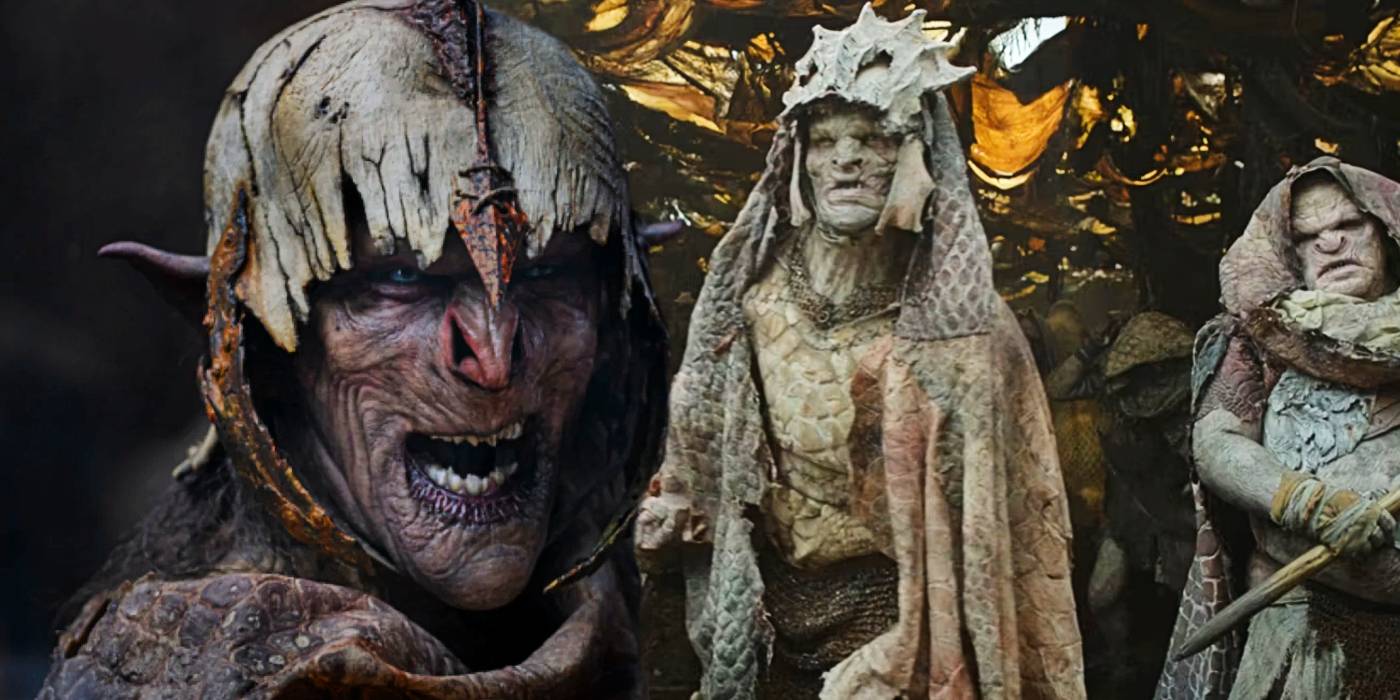
5. Orcs Look Fantastic In Rings Of Power
Practical Effects Have Come A Long Way Since Lord Of The Rings


4. Peter Jackson's Lord Of The Rings Ruined Isildur
Rings Of Power's Version Of Isildur Is More Faithful To Tolkien Canon
I'm not going to pretend that I like what Jackson did to Isildur, but that doesn't make Rings on Prime's Isildur any better. His character, at the moment, is nothing like the heroic king that he would become, but just a wandering, confused young guy whose motivations keep changing. (If he wants to go West and "keep the old ways" with his brother, why does he suddenly change his mind in the next episode and go to Middle-earth? By the way, that whole thing could have been fixed if Elendil had said something like, "You can't go west until you've proven yourself and regained some respect. Come to Middle-earth, then you can go west.") I don't agree that such a portrayal--which, so far, has been completely original to the showrunners--qualifies as "more lore-accurate" or "better".
I also don't agree that Isildur was "ruined" in the movies. I would have loved to see more of his heroism, but that "evil" smile he gives Elrond in Mt. Doom is very clearly because the Ring corrupted him, and it kind of parallels what Frodo does in Mt. Doom later.
It's important to remember that the whole Mount Doom scene between Elrond and Isildur was done to show the power of the Ring over someone's heart (foreshadowing Boromir and Frodo). What was the purpose of all the changes made to Isildur in Rings on Prime?
3. Rings Of Power Gives Elf Characters More Variety
Jackson's Lord Of The Rings Made Elves Too Perfect
First off, isn't this the exact same article that was complaining Elrond was "too critical" in #7? But now, all their personalities blur together?
Secondly, more variety? Yes. Good variety? Not really. What's especially rich is this:
Characters like Celebrimbor and Feanor were known to have significant faults, which often came down to pride and hubris. This is communicated far better in The Rings of Power, where these characters are seen to struggle with temptation in a far more relatable way and where one Elf is entirely defined from another.
The first problem with this analysis is that we never see Feanor do anything, much less struggle with pride (and did the show ever discuss Feanor's weaknesses?). The second problem is that we don't really see Celebrimbor "struggling with temptation", mainly because the "temptation" is so poorly executed--that whole (completely original) plotline about how the Elves must leave Middle-earth or die, but can be saved by mithril being turned into a ring really weakens the whole "temptation of power" and turns it into a justified struggle to remain in their home.
And what's more, the show completely cut out one character trait from many of them--they weren't fooled by Sauron in disguise. I don't think Rings on Prime gets to take credit for their characters when the show takes away an important character trait just to make their villain look stronger.
But sure, "more variety".
2. Middle-Earth Is More Diverse In Rings Of Power
Lord Of The Rings' Casting Greatly Lacked Diversity
1. Rings Of Power Covers More Middle-Earth Stories At Once
Lord Of The Rings Was Limited By Its Movie Format
I burst out laughing when I saw this.
There is so much wasted time in this season! Just some examples:
- The whole "will Numenor help the Southlands" debate gets solved and then reopened
- There's a plotline about Isildur being missing and presumed dead, when everyone knows he lives to cut the Ring off Sauron's hand
- Whether the Harfoots will trust totally-not-Gandalf or not keeps getting solved and then reopened, again and again
- Those three witches
Remember how for #8, I pointed out how much of Sauron's story they cut out? They cut that out in favor of wasting time! Couldn't we have at least gotten two episodes of Sauron and Celebrimbor, instead of just part of one?
They may have covered more Middle-earth stories, but that doesn't make the stories good. They were silly, illogical, and massive wastes of time.
Also, covering more stories "at once" isn't better. If it's anything at all, it's a problem because those stories didn't happen "at once".
The Lord of the Rings tells the story about how to defeat the titular villain. All the stories in those books are indeed about defeating Sauron. That's not a limitation--that's called focus. Meanwhile, pretty much none of the Rings of Power's stories are about the aforementioned rings of power. How is that better?
How is that better applies to most of this article. Best case, it's just "different", but none of these are better.


