Wednesday, May 15, 2024

Darkness Will Bind Them?

 English lesson! 


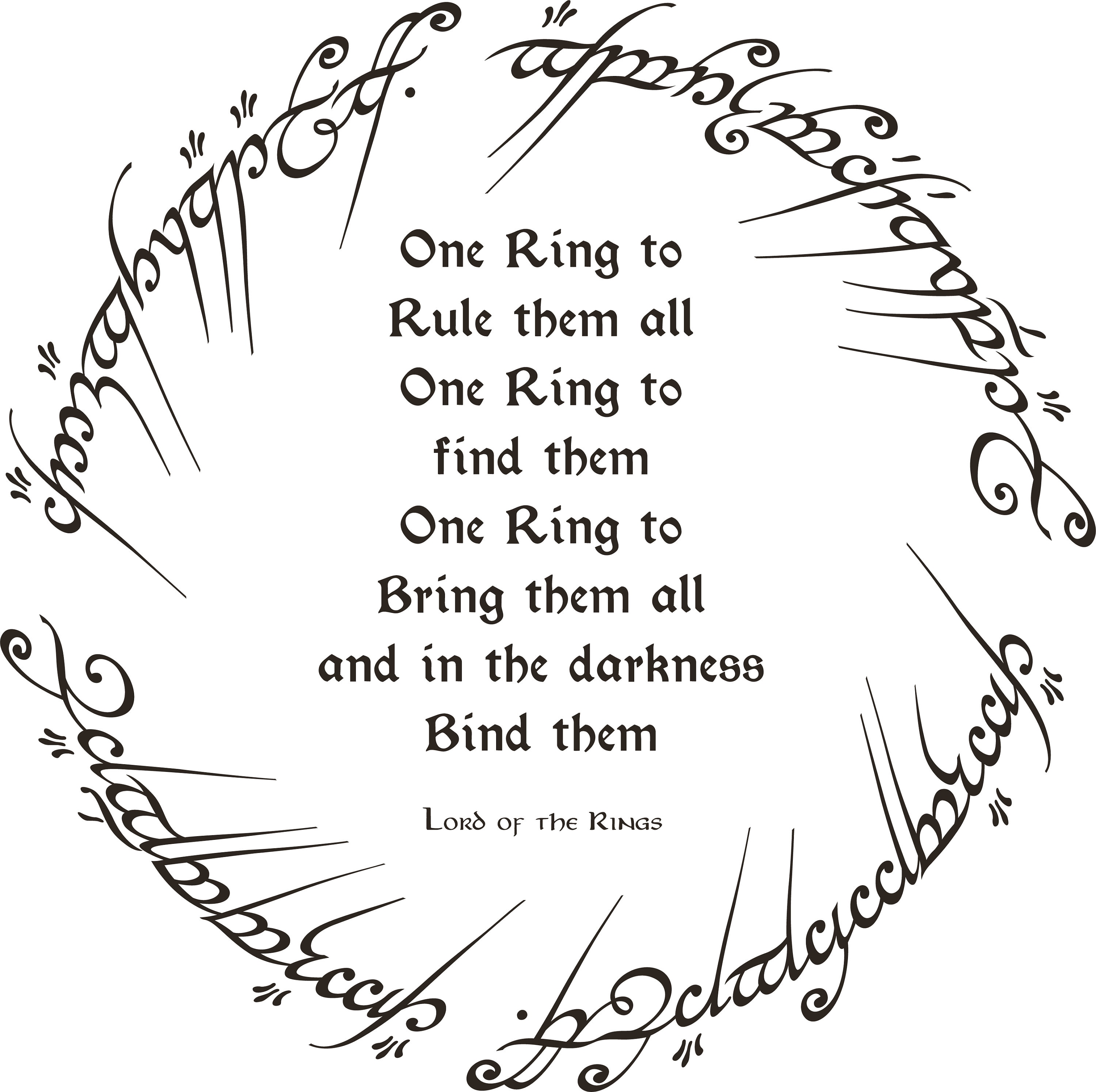
In that poem, there are four verbs: "rule", "find", "bring", and "bind". A verb must be done by a noun; so, dear reader, which noun is doing those verbs? Is it

a) One Ring, 

b) Darkness, or

c), Them? 

Well, according to Rings on Prime, the answer is "Darkness":


The real answer, of course, is a), the One Ring. The One Ring will bind the other rings in darkness. 

Seriously... did an AI create this trailer? 

By the way, if my add-on is to be believed, yes, that trailer is approaching a 1:5 like-to-dislike ratio. 

Tuesday, May 14, 2024

Is Someone At Amazon Reading My Blog?

 Like everyone else on Twitter, I knew that Rings on Prime's second season's trailer would drop today. I have watched the thing, and of course I have thoughts, but the thing that stood out the most to me was this one shot of The Main Character:


Does this mean somebody at Amazon was reading my previous posts about her hair not being in a crown?!

Probably not, but just in case some person is, in fact, reading my blog, here's the one thing I want to say to you the most: stop messing with stuff. Stop giving Pharazon's character traits to Miriel. Stop inventing characters if you can't include the already-existing ones (hey, was Anarion even in that trailer? He wasn't in the first season. What about Cirdan the Shipwright? I'm pretty sure they promised us Cirdan). Stop giving new powers to the Silmarils, as if they weren't already epic enough. 

We love Tolkien as his works are. You want to win an audience back? Stop messing with Tolkien to the point that your show is unrecognizable as Tolkien's works. 

Tuesday, April 2, 2024

If This Is Lore, It's Bad Lore

I think I've read somewhere that the two Rings on Prime showrunners really know their Middle-earth lore. Every once in a while, something flashes through in the show that supports this claim; the problem is that the lore is used so badly that it makes no sense. In addition to the rough and pointless explanation of the Silmarils and the invention of an elf fighting a Balrog on the Misty Mountains instead of near Gondolin, there was something else that gave me pause.

I'm not saying it's unreasonable, per se, but in the context of the show...

To set the scene, The Main Character is in an elven graveyard, looking at the images of dead elves carved into living trees. The scene flashes by a few dead elves, and this one grave caught my eye:


At no point does the show give a name for this dead elf, but upon my first viewing, I saw this glimpse and immediately thought, I know who that is! In the Silmarillion, there is one infamous elf-dog duo, and I can't think of another one. 

Then I decided that my knee-jerk reaction might be wrong, so I did some digging just to verify. 

What do we have in the picture? An elf that we know is dead and a big shaggy dog. That star on his shoulder is worn by all the elves in this show, and I remember fans arguing over whether that was the star of Feanor or the star of Finarfin (this article explains why it's really neither). One of Feanor's sons was Celegorm, and because he was a renowned hunter, the Valar Orome gave him a mighty hound dog named Huan. 

That dog in the picture first gave me pause, because that is not a hound dog. My brother has a hound-shepherd mix, and she has short hair and enormous eyes, which is about the opposite of that dog. Then I remembered that while Huan is called Huan the Hound, he's actually a wolfhound, not a hound... and a wolfhound looks pretty much like that carving! He's also too small to be Huan--if you've ever seen the Silmarillion cover that has the woman riding on the dog, that's Huan:

Image source, ironically, from Amazon.

Regardless, I think it's reasonable to assume this grave is Celegorm and Huan, yes? If it's not, and the show just invented another wolfhound-elf duo purely to be in a tomb, then I don't think that's my fault for guessing wrong. 

Having said all that... why was Celegorm buried with honor when he was so evil that Huan abandoned him? 

Most of Feanor's family had severe moral shortcomings, but a serious argument can be made for Celegorm being the worst of them. His primary role involved manipulating the people of Nargothrond (the city of Finrod, Galadriel's beloved brother) away from their true king (which was Finrod); lying to Luthien and then imprisoning her to force her to marry him; and then egging on his brothers to the Second Kinslaying (where he died fighting Luthien's son). 

Hang on, hang on, hang on... the show wants me to believe that The Main Character is Galadriel. The Main Character--in that very scene the screenshot is taken from--is mourning her brother Finrod. Celegorm undermined Finrod and tried to take his city and his people from him. Why, why, is he buried next to Finrod? Why would The Main Character allow that? 

I could be wrong (I don't have the book with me at this moment), but... but didn't Celegorm specifically mean for Finrod to die in Sauron's dungeons? As much as The Main Character hates Sauron for murdering her brother, shouldn't she also despise Celegorm for abandoning her brother to die? And yet, here we have his statue next to Finrod's, and even a line about how The Main Character thought she'd be buried next to all the dead elves there, including Celegorm? 

By the by, after it was revealed that Celegorm and one of Feanor's other sons had lied to Luthien and... possibly abandoned Finrod to die, on purpose? I can't remember... the people of Nargothrond turned them out, and even Celegorm's nephew was so disgusted that he refused to go along with him. That nephew was Celebrimbor, also a character in the show. 

Furthermore, in that second Kinslaying, Celegorm's servants captured Luthien's grandsons and deliberately abandoned them to die in the forest. Maedhros and Maglor, two of Feanor's less objectionable sons, heard about this and were horrified, so they searched for the two boys but never found them. I... won't say that's as severe a rejection as Celebrimbor's, but that's certainly not an honorable memory. 

All of this is to say that it makes no sense for these two to be memorialized next to each other, and given how soundly Celegorm was rejected by even the other Noldor, I don't know who would have built his memorial in the Noldor capital. 

It also makes no sense for Huan to be memorialized with Celegorm, because he abandoned Celegorm and devoted himself to Beren and Luthien instead. 

It is not impossible for Gil-galad to have built this as some peace memorial between the elves, or for some other powerful Noldor lord to want to honor both of them, or for someone to have decided that every Noldor who fought against Morgoth should be honored, and that that was more important than any of their infighting. All of this is possible. I would love for that to have been explained. 

But really, what was the point? What was the point of hinting at Celegorm and Huan, but doing it so perfunctorily and badly? 

Saturday, January 20, 2024

Evil Races? Let's Look At Two Fantasy Examples

This post does not have a point. It's just a series of my observations. 

One of the key points of Rings on Prime was their attempt to humanize the orcs, which is interesting because Tolkien himself also struggled with the idea of having an intrinsically evil race, like orcs. This video, from about 14:10-14:45 or so, does a great job explaining why RoP failed. 

I've heard things (but it's 10 PM at night and I have work tomorrow, so I'm not researching them now) about Tolkien having a hard time reconciling an "evil race" like orcs with his values of redemption. I've also read a lot of headlines about Tolkien's creation of an evil race being racist and problematic and so on and so forth. I remember also hearing about evil races being reevaluated in other forms of fantasy media, such as D&D--hence this song, for example. 

Something I realized recently, though, is that there is another "evil race" in fantasy that I have never heard this kind of theorizing about: the dementors from Harry Potter. Dear reader, I wonder why this might be? Why are fantasy readers uncomfortable with the orcs being an "evil race", but not uncomfortable with the dementors? 

I mean, I haven’t seen any D&D stuff rewriting the dementors to be sympathetic characters who have their own perspective, and NO, that is NOT A SUGGESTION. Please don’t do that! Having the unsympathetic villain makes the story more interesting, and when the characters spend the entire third book wondering about the morals of compromising with something so evil because it’s a way to punish other evil people… I mean, that’s very interesting and thought-provoking. (Especially when it turns out that they had no compunctions about punishing innocent people, because they are unrestrained evil.)

But I do have to wonder, why are intrinsically evil characters not even noticed in one series, but make lots of other people (including the writer) uncomfortable in a different series?

I suppose one possibility is the context of the story. Rowling’s books have a lot of discussion about unfair treatment to other creatures, so when she trots out one irredeemable creature, everyone kind of gives it a pass. 

Perhaps also because the only things we ever see dementors do are things that humans can’t do, and therefore we have no investment in them being redeemed. Orcs, on the other hand, engage in cruelty and violence, things that humans do and can be redeemed from, so we have an investment in their redemption.

However, I think the biggest difference is that the dementors are clearly some kind of animal, but the orcs in Tolkien were once other creatures. (The movies say they were once elves who were tortured and corrupted, and Rings on Prime really leaned into that; I’ve heard somewhere that Tolkien changed their backstory into something else, but I don’t remember what it was, and that’s not the one that everyone’s thinking of anyway, so…) Orcs are on one level the Elves are on too, while dementors are more in the category of wolves, sharks, and other animals that haunt our nightmares… except that the dementors in the book clearly talk to humans, so theoretically they should be on the same level as humans. 

To be honest, I don’t really care. There are other creatures in Tolkien’ legendarium that no one feels the need to redeem (Balrogs, barrow-wights, and Nazgûl all come to mind), so maybe I’m wasting my time wondering over this question. But I thought it was an interesting difference, and I haven’t posted in a while, so there it is. If anyone has thoughts, then the comments should be working!

Wednesday, November 22, 2023

Eight Things Rings on Prime Absolutely Did Not Do Better Than Peter Jackson

 I'm not the biggest fan of Screen Rant, mostly because they have interesting headlines that I click on before realizing it's another article from them and that now my Facebook feed will be full of their far-less interesting articles. But I saw this article and I simply couldn't resist clicking on it, because yikes: "8 Things The Rings Of Power Does Better Than Peter Jackson’s Lord Of The Rings Movies".

Full disclosure, I saw the Jackson trilogy before I read the books, so I'm rather biased in favor of Jackson. Nonetheless, let's take a look at their list. I'm going to deal with their subheadings, not all their details unless their details are important. 

8. Rings Of Power Makes Sauron A More Interesting Character:

Sauron Was An Unseen Villain In Jackson's Lord Of The Rings

Sauron was an "unseen villain" in the trilogy? We saw his eye all the time (and yes, I know that the "eye" wasn't described that way in the books), and we heard his voice, which was freaky! If anything, that "eye" means we saw him more in the movies than we did in the actual books! (In fact... do we ever "see" him in the books?) He wasn't supposed to be the "interesting" villain; that was more Saruman, Denethor, and Wormtongue, who were admittedly a little shortchanged in Jackson's trilogies. 

But the point of the article isn't Jackson's imperfections; it's Payne and McKay's supposed areas of superiority over Jackson. The problem is that Payne and McKay's Sauron isn't interesting; he's just confusing. They don't establish his motivations until much too late, and although they suggest going back and rewatching the show now that you know Halbrand is Sauron (hahaha, now that you know, as if everyone didn't instantly know), it doesn't clarify any of his motivations. Confusing is not the same as interesting. 

This is the part that really annoyed me, though:

Tolkien's various notes and unfinished stories, collected and posthumously published as The Silmarillion and other books, provided even further details about Sauron, including his multiple plans, forms, and general personality. Prime Video's The Rings of Power really works in that it brings these aspects to the screen. Halbrand may be an invention of the series, but he better reflects who Sauron was.

It does not work. It absolutely does not work. The appendices say that Sauron "endeavours to seduce the Eldar. Gil-galad refuses to treat with him; but the smiths of Eregion are won over" in the year SA 1200, and three hundred years later, "The Elven-smiths instructed by Sauron reach the height of their skill. they begin forging the Rings of Power" (364, Return of the King, 1978 edition). They take roughly 100 years to finish, and only after Sauron forges the One Ring does Celebrimbor realize Sauron's real plans. That's about 400 years of planning, plotting, deceiving, and so on. In the show? He steals some things, he says a few diplomatic lines... and the only reason they're seen as clever or manipulative is because The Main Character is so utterly demanding and tactless. The last episode has him suggesting stuff to Celebrimbor that Celebrimbor should already know only to have another metaphor, but that takes up only part of the episode. And that, to Screen Rant, is "working"? Condensing 400 years of plotting and scheming into a few dumb lines that are primarily metaphor and some theft is somehow better than Peter Jackson's Great Eye? Better? 

In the last scene between Sauron and The Main Character, he lays out how she has been controlling events, and not him. You think that's closer to Sauron's character? 

That's just different. That's not better.

7 Peter Jackson's Lord Of The Rings Changed Elrond:

Elrond Is Far Kinder & Less Critical In Rings Of Power

I think this is the most reasonable one on the list, but it's once again different, not better. I quibble with the idea of describing Elrond as a "politician", when he should have been called a "herald" or a "captain"... oh wait, are they trying to make it "accessible" to "modern audiences"?  And to be fair, Robert Aramayo was an excellent choice to play Elrond (and I sincerely hope he quits Rings on Prime and goes to HBO's Harry Potter series and plays Lupin. He's just the right age, he's clearly a subtle actor, and he sure looks like Lupin!) Elrond's script tended to make the most sense, he was the least likely to describe what we could see happening on screen anyway. Like Sauron, his motivations weren't always clear, but they sure make more sense than Sauron's do. 

But none of that makes him better than Jackson's Elrond. I know Elrond never opposed Arwen's marriage to Aragorn in the book, which is a noticeable change. On the other hand, the Elrond in Rings on Prime agreed to "treat" with Sauron in the show, which he clearly didn't do in the lore. None of the Elves who were corrupted by him knew that he was Sauron at first, either, similar to the show, but certain Elves still sensed and mistrusted him because of their perceptiveness--Elrond in particular. So, which change is worse? The one where he loves his daughter so much he needs to be persuaded extra hard to allow her to marry a mortal? Or the one where he loses his perceptiveness and--possibly--some of his virtue and his rejection of power's temptations? 

To be honest, the Elrond in the show seems to want power--not necessarily for himself, but for the people around him. He first goes to the Dwarves because he wants to help Celebrimbor build the most powerful forge ever in order to recreate the wonders of Feanor (because the Silmarillion's whole plotline totally isn't a warning sign for how terrible an idea that is, oh no), and not to go revisit his friend. 

I'm with Jackson on this one, not McKay and Payne. 

6. Dwarves Aren't Just Comic Relief In Rings Of Power

Gimli (& Other Dwarves) Were Far More Serious In Tolkien's Works

Not really. In the books, they were comical for excessive courtesy and formality (especially Thorin in The Hobbit); in Jackson, Gimli was comical for his jokes and his daring; and in Rings on Prime, the dwarf prince was comical for crudeness and informality. True, Gimli was quite shortchanged in the Jackson movies, and we don't see his courtesy or his deep love of craftsmanship or beautiful ore, but we don't really get that from the dwarves in Rings on Prime either, so... different but not better. 

Yes, I know the show has a whole conflict about whether to mine mithril or not, but we don't see the Dwarves ever working at their forges or discussing their pride in created things. It's just interpersonal conflict. That's not really better, and it's certainly not closer to Tolkien than Jackson was. 

Now that I really think about it, we never hear about the Dwarves making anything in the show. Not only that, but the costumes were so simple and plain that we don't get to see the results of Dwarven skill and pride in their work, and that was a pretty big thing in the books. At least in Jackson's original trilogy, we get to see the beautiful mithril shirt and the designs on Gimli's helmet. We see a lot more beautiful craftsmanship in the Hobbit movies, even if some of it was rather silly. But what metal craftsmanship do we even see in the show? We hear about them building the forge, but that's not really the same. 

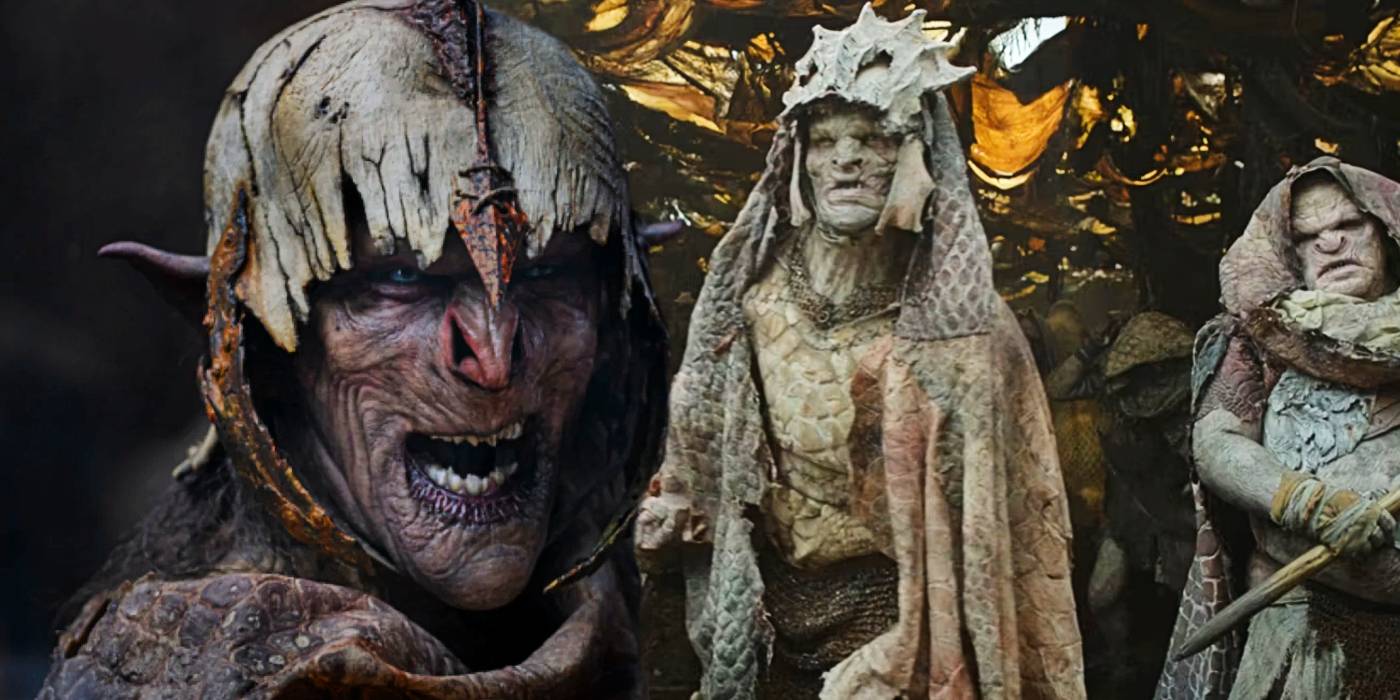
5. Orcs Look Fantastic In Rings Of Power

Practical Effects Have Come A Long Way Since Lord Of The Rings

This is the picture Screen Rant uses for the Rings on Primes' orcs:

Here are some of Jackson's orcs:

Different, but not better. 

4. Peter Jackson's Lord Of The Rings Ruined Isildur

Rings Of Power's Version Of Isildur Is More Faithful To Tolkien Canon

I'm not going to pretend that I like what Jackson did to Isildur, but that doesn't make Rings on Prime's Isildur any better. His character, at the moment, is nothing like the heroic king that he would become, but just a wandering, confused young guy whose motivations keep changing. (If he wants to go West and "keep the old ways" with his brother, why does he suddenly change his mind in the next episode and go to Middle-earth? By the way, that whole thing could have been fixed if Elendil had said something like, "You can't go west until you've proven yourself and regained some respect. Come to Middle-earth, then you can go west.") I don't agree that such a portrayal--which, so far, has been completely original to the showrunners--qualifies as "more lore-accurate" or "better". 

I also don't agree that Isildur was "ruined" in the movies. I would have loved to see more of his heroism, but that "evil" smile he gives Elrond in Mt. Doom is very clearly because the Ring corrupted him, and it kind of parallels what Frodo does in Mt. Doom later. 

It's important to remember that the whole Mount Doom scene between Elrond and Isildur was done to show the power of the Ring over someone's heart (foreshadowing Boromir and Frodo). What was the purpose of all the changes made to Isildur in Rings on Prime? 

3. Rings Of Power Gives Elf Characters More Variety

Jackson's Lord Of The Rings Made Elves Too Perfect

First off, isn't this the exact same article that was complaining Elrond was "too critical" in #7? But now, all their personalities blur together? 

Secondly, more variety? Yes. Good variety? Not really. What's especially rich is this:

Characters like Celebrimbor and Feanor were known to have significant faults, which often came down to pride and hubris. This is communicated far better in The Rings of Power, where these characters are seen to struggle with temptation in a far more relatable way and where one Elf is entirely defined from another.

The first problem with this analysis is that we never see Feanor do anything, much less struggle with pride (and did the show ever discuss Feanor's weaknesses?). The second problem is that we don't really see Celebrimbor "struggling with temptation", mainly because the "temptation" is so poorly executed--that whole (completely original) plotline about how the Elves must leave Middle-earth or die, but can be saved by mithril being turned into a ring really weakens the whole "temptation of power" and turns it into a justified struggle to remain in their home. 

And what's more, the show completely cut out one character trait from many of them--they weren't fooled by Sauron in disguise. I don't think Rings on Prime gets to take credit for their characters when the show takes away an important character trait just to make their villain look stronger. 

But sure, "more variety". 

2. Middle-Earth Is More Diverse In Rings Of Power

Lord Of The Rings' Casting Greatly Lacked Diversity

I'm not getting drawn into this one. 

1. Rings Of Power Covers More Middle-Earth Stories At Once

Lord Of The Rings Was Limited By Its Movie Format

I burst out laughing when I saw this. 
There is so much wasted time in this season! Just some examples:

  • The whole "will Numenor help the Southlands" debate gets solved and then reopened
  • There's a plotline about Isildur being missing and presumed dead, when everyone knows he lives to cut the Ring off Sauron's hand
  • Whether the Harfoots will trust totally-not-Gandalf or not keeps getting solved and then reopened, again and again
  • Those three witches

Remember how for #8, I pointed out how much of Sauron's story they cut out? They cut that out in favor of wasting time! Couldn't we have at least gotten two episodes of Sauron and Celebrimbor, instead of just part of one?

They may have covered more Middle-earth stories, but that doesn't make the stories good. They were silly, illogical, and massive wastes of time. 

Also, covering more stories "at once" isn't better. If it's anything at all, it's a problem because those stories didn't happen "at once". 

The Lord of the Rings tells the story about how to defeat the titular villain. All the stories in those books are indeed about defeating Sauron. That's not a limitation--that's called focus. Meanwhile, pretty much none of the Rings of Power's stories are about the aforementioned rings of power. How is that better? 

How is that better applies to most of this article. Best case, it's just "different", but none of these are better. 

Wednesday, September 6, 2023

*Plot Twist Spoilers* An Implausible Fear Was Right

 There's one major plot twist at the end of the series, and this post spoils that. I somewhat think everyone knows what it is at this point, but in case you don't this is your warning. 

So. The first episode of Rings on Prime has The Main Character convinced that even though Morgoth was defeated, his lieutenant Sauron was still out there, and despite finding no trace of him after hundreds of years of searching, she is determined to find him. Then High King Gil-galad calls her back and declares the war is over and there is to be no more searching for Sauron. What he didn't tell The Main Character is that he knew Sauron was still out there because a tree was getting infected; he decided to stop The Main Character from searching for Sauron because "The same wind that seeks to blow out a fire may also cause its spread." (Or approximately those words.) 

I've heard a variety of critics of the show saying something along the lines of, "We know The Main Character will be right in the end, even if she has no proof now", but something I've realized in the last couple of weeks is that she isn't right--Gil-galad is. In the very actions of trying to destroy Sauron, The Main Character returned Sauron to power. 

I mean, the show never highlighted that. A moment of reflection from The Main Character when she realizes she probably shouldn't have tried to "touch the darkness" because "touching the darkness" didn't show her the light, it just caused all the problems for everyone, might have been nice. But no. 

Anyway...


The Metaphors Are Weird

There are two metaphors that are essential to the plot of the season. The first metaphor--not the first one the show says, but the first one I'm going to discuss, because it makes sense--is Gil-galad saying that wind can put fire out or make it spread. The Main Character is the wind, and Sauron is the fire; if she keeps trying to "put him out", she might make him return to power instead. Interestingly, Sauron is linked closely to fire, so this isn't too unrealistic to say. The problem is that this metaphor is weird for one person. Fire is out of control; a person (usually) is under their own control. This metaphor would make a lot more sense if we were talking about a large group of people, or a cause. 

Think about something like the Intolerable Acts from the American Revolution. After the Sons of Liberty destroyed a lot of tea in an act of protest, the British Parliament passed four severe laws to punish the entire city of Boston as an example to other colonists--blow out that fire, if you will. However, it made people angrier instead, and other colonies were spurred to action instead of frightened into obedience. The attempt to quash the Revolution instead made it spread. 

So in theory, this analogy could make sense, but it doesn't make sense for Sauron, because Sauron is not a cause or an ideology. The orcs do not believe in the virtue of Sauron. They're not going to rally to his defense. They were described as slaves of evil, for goodness' sake--if slaves' masters are defeated, will they rally to avenge him? This is not a situation where any fighting will continue once Sauron is gone; this is more of a head-of-the-snake situation. So, it doesn't make sense. 

It ends up being right, but it doesn't make sense. Jeepers, this show...

The second metaphor... you know, I'm not going to quote it, because it's confusing, bewildering, and cumbersome. I'll just say it has a ship, a rock, light, darkness, and light reflecting on dark water and therefore dark water looking like light. What it means is that sometimes it is unclear what the right course of action is, and you learn what the right course of action is by choosing the wrong course of action. (But wait, if you don't know what the right course of action is, how do you know what the wrong course of action is?) 

A lot of other people have said that this metaphor makes no sense in the context of the story, and I... sort of... almost... kind of disagree. It can make sense in the context of the story. It doesn't because the dialogue didn't set it up particularly well, but it could. 

Here's the context in which the metaphor plays out: The Main Character is ordered to stop her search for Sauron because the war is over (the High King didn't tell her that he knew Sauron was still out there), and so she's ordered to return to Valinor. When The Main Character remembers this metaphor, she decides to disobey Gil-galad and follow her instincts, doing what she believed was right, and continuing to fight. 

So, in this particular situation, there are two possible light-dark-ship-stone interpretations, where the "light" choice isn't clear. The first possibility is the debate on when it's right to follow your proper leader and when it's right to follow your own instincts and do what is right. There is a time to trust your leaders, even when they don't tell you everything, but there is also a time to stand up to the people over you and do what you know is right--and it's not always obvious which one is right in any given situation. The other possibility is knowing when it's right to fight for what's right and when it's right to accept peace. There's some meme on Facebook (I can't find it now) that says something like the strongest person knows when to use a pen and when to use a sword, but again, that's not always obvious, and you probably have to learn that from experience. Both of these moral debates could plausibly fit the metaphor and the situation The Main Character finds herself in. 

Now, that's me putting those interpretations on there. That is not the show properly explaining the dilemma. 

Either way, The Main Character decides to be the "stone" and chooses "darkness" (defying the leader, choosing fighting over peace) and returns to Middle-earth... by jumping out of the boat and swimming across the ocean...


So Gil-galad Was Right, Because...

Because The Main Character decided to swim back to Middle-earth, because she decides to be the "stone", she finds a raft in the middle of nowhere, and lo and behold, a fellow called Halbrand is on this raft. They end up going to Numenor. The Main Character really wants Tar-Miriel to send an army to the Southlands because she thinks Sauron is gathering orcs there, but Halbrand is the lost king of the Southlands and with an army from Numenor, he can reunite the Southlands and defeat Sauron. Halbrand insists that he is in fact not the king of the Southlands, but The Main Character doesn't listen. Halbrand also says that he did a lot of terrible things in the past, and so he doesn't want to be the king because he is unworthy, and he just wants to work as a nobody blacksmith. However, The Main Character keeps insisting and prodding (and manipulating) until he eventually agrees. They fight together to take down the orcs in the Southlands, there are a couple of heart-to-hearts between Halbrand and The Main Character in which he says she inspired him to have faith in himself again and hope that he could be redeemed. Then it's revealed that he's actually Sauron. He says again that The Main Character inspired him, and then he lays out his plans to dominate Middle-earth, with her by his side, and said he couldn't do it without her. 

So what that means is that by "choosing the darkness" The Main Character did indeed "spread the fire she sought to put out". Becuase she kept hunting for Sauron, she inspired him to return to power. 

Because she hated him, she inspired him to be him. 

Here's the problem with all of this: yes, Gil-galad ended up being right and The Main Character ended up being wrong, but not through any logical, standard, or predictable sequence of events; rather, through a whole lot of deeply implausible events that involve finding the only raft in the middle of an ocean and The Main Character refusing to believe the honest truth. The prediction was right, but not in any way Gil-galad could possibly have guessed (unless he was a prophet of some kind; I don't remember if he is in the books, and if he is in the show, the show didn't establish that). This makes Gil-galad lucky rather than right, and that does not inspire any respect for him. 

It also doesn't exactly make for a strong plot. It makes for a sequence of events, I suppose, but not really a plot. 


All That Is Assuming...

That Sauron was telling the truth, of course. I remember reading, but can't find now, an article when the two showrunners say that you're supposed to go back and second-guess if Sauron was ever telling The Main Character the truth, and if anything he says at all can be trusted. If he wasn't telling her the truth, then the alternative is that he was somehow manipulating her into doing all this. Gil-galad being right depends on Sauron being "out there" but not a threat until he encountered The Main Character, which tracks with everything that he said. On the other hand, if the whole time he was manipulating The Main Character, that means he was a threat from the beginning, so The Main Character was right and Gil-galad was wrong. 

The problem, of course, is that we don't know which it was. 

Like I said, I couldn't find that one article of them saying not to trust Sauron, but I did find this quote from them: 

She also has to bear some responsibility; “I empowered the Dark Lord. I saved his life on a raft. I was party to him coming from obscurity to head an army.”

Hm. Okay. Lots to unpack here. 

Obviously, this doesn't say whether he was telling the truth or not. What it does say is that Galadriel was responsible for Sauron's rise to power, and it implies that she was necessary for Sauron's rise to power. All the stuff that she did--getting him in good graces with the Numenoreans, using them to defeat the orcs and subdue Adar, and finally getting into good graces with Celebrimbor to start forging the rings with mithril--he needed her to do all that. I mean, that does indicate Gil-galad was correct and she was incorrect, so I guess that's something. 

In theory, this isn't a bad method of storytelling--a lower-down person befriending and using a well-placed person in order to rise through the ranks is a time-honored story, both in fiction and nonfiction. The reason this is baffling is that Sauron isn't a low-ranking person, he's Sauron! He's a shapeshifter in the First and Second Ages, and he does in fact corrupt the Elves of Eregion without needing Galadriel--as a point of fact, Galadriel is one of those people specifically mentioned to not trust him, while Celebrimbor trusted him quickly. See, in the books, he took on the form of Annatar and claimed to be sent by the Valar to assist the Elves left in Middle-earth, which he could plausibly do because he did in fact have special powers and he did have skill in craftsmanship to share with the Elves. This is when they make the rings. No assistance from anyone else necessary. 

Now, I checked the appendices and didn't find this spelled out (it's mentioned briefly as part of the timeline of the Second Age in Appendix B), so maybe they didn't have the rights to this story. 

But let's just say for the sake of argument that Sauron did need The Main Character to get into the good graces of Eregion--that means he had to somehow predict to meet her in the middle of the ocean on a raft, depend on her not believing that he's not the king of the Southlands, depend on her convincing Miriel to send an army when he won't help convince Miriel, and then somehow depend on her taking him to Eregion after that, in order to participate in a project that he had no way of knowing was happening, given that The Main Character had no idea it was happening and (if the timeline is to be believed) didn't even begin until after he met The Main Character. This isn't master plotting, this is getting unbelievably lucky. 

In fact, it's the same level of luck that Gil-galad had in order to correctly predict that Galadriel's attempt to destroy Sauron would return Sauron to power (when Sauron shouldn't have needed her to return to power in the first place!). 

Now, I will say, with a certain sprinkling of magic--magic that is hinted at in the lore, I might add--this could make sense. If Sauron has Tar-Palantir-esque powers, then theoretically he could pull this off. But I don't think he does. As far as I know, Sauron's powers involve manipulating fire, making magic rings, and shapeshifting. He is described as a liar and a deceiver, but that doesn't mean he can change your mind magically, and--most of all--if the showrunners decided to change Sauron's powers, they need to somehow explain Sauron's powers, because as it stands, we have no idea what Sauron can and cannot do. 

Alternatively, maybe Sauron's actual plan was to just get into The Main Character's good graces and then just go from there, without having Eregion as an end destination or having anywhere as an end destination; work spontaneously rather than create a long-term plan. That's never explained in the show, and I don't know why he would have picked The Main Character instead of any of the other Elves, so... explanation, please? 

Or maybe his actual goal was Numenor the entire time? Maybe, as he was floating on some random raft in the middle of the sea, his real goal was to get picked up by the sea-faring, sea-loving Numenoreans, and running into The Main Character was just a coincidence and everything that happened afterwards was his adapting? I mean, that could be vaguely interesting, if the show would explain it. 


In Conclusion

I originally was going to have another section about how the show confused feeling guilty about doing evil with not believing in yourself, or thought that believing in yourself was the way to move on from doing evil, but I don't remember the dialogue well enough to pinpoint exactly what the problem was, so I'm just going to leave it be. I will say that Sauron's motivations are never properly explained--that is to say, his motivation at the end, at least, was clearly defined as wanting to bring order to Middle-earth, but his smaller motivations, such as how any of his actions helped him reach this actual goal. 

A major, major issue with this show was characters being right about things they shouldn't have been right on. There were little moments, like The Main Character just getting lucky about a hidden door in the first episode or Elrond lucking out and guessing that a children's rhyme has the rhythm to open the most secret door in Moria, and then there were long plotlines like the whole one about Sauron returning to power. None of this makes Gil-galad seem wise or Sauron seem clever, because it doesn't rely on wisdom or cleverness. It relies on implausible, unpredictable nonsense. That's not a compelling conflict. 
Wednesday, August 30, 2023

Lore Isn't Useful If You Don't Explain It

This one might be the post that I'm most wrong about, and if I am, feel free to correct me in the comments.  

There are a few cases where I will concede Rings on Prime was fairly accurate to the lore, but in those cases, they presented it the same way Peter Jackson's trilogy has Eowyn present Numenorean lore. The major difference between these two productions is that Peter Jackson relegated Numenorean lore to the extended editions, where the initiated would be happy to see it but it wasn't essential to the plot or front and center in the story. Rings on Prime really struggled with that. 

There are two scenes in the Jackson trilogy that I'm thinking of--the first is that "stew" scene, when Eowyn tries to guess how old Aragorn is, and when he tells her, she suddenly says, "You are one of the Dunedain, a descendant of Numenor..." and so on. The second time (it's in Return of the King), right before Pippin snatches the palantir, Eowyn tells Aragorn about her nightmare of a great wave, which I'm pretty sure is a reference to the destruction of Numenor. (Or... was that the dream that Boromir and Faramir both had, and they gave it to Eowyn for some reason? Either way, a great wave sounds very like the destruction of Numenor.)

Incidentally, that first scene with Eowyn was one of the first scenes I saw of Lord of the Rings, when I was eight or nine years old, and I didn't have a clue what it meant. I think a lot of people probably don't know what it means, but that's fine, because it's not important for the story. It was clearly there out of respect for the story and respect for the people who already knew the story. 

I guess there's a third time, when Arwen whispers to Aragorn, "May the grace of the Valar protect you." Who are the Valar? But that doesn't really affect any of the story. It's just a nice scene reminding us that Arwen exists.

The problem with Rings on Prime is that most of their lore is presented in the same way that those three tidbits of lore are presented in the trilogy: without proper explanation. For example, and this is the biggest example, does the show ever explain what a Silmaril is? Or, for that matter, who Feanor is? Why the dwarves and the elves don't get along, but some of them get along, but it's odd that they get along? What an Istar is? 

There's a scene where Miriel says something like, "The Faithful believe that this tree signifies that the eyes of the Valar are still upon us--and their judgment." Cool. Who are the Faithful? Who are the Valar? And unlike the scene when Arwen whispers that, this actually is plot-relevant: this is presumably why Miriel suddenly changes her mind when the petals start falling from the White Tree and decides she will go against the beliefs of most of her people, when she was too afraid to do so just earlier. So... the judgment of the Valar is clearly more important than the beliefs of the people, so they're clearly very important... who are they? 

And yes, I'm going entirely off of a memory that is months old, but I'm not double-checking it because I'm not giving Amazon more views. I might be wrong about this one. But until I can buy these on DVD from a used bookstore, I'm not rewatching them. And I probably won't even rewatch them then.